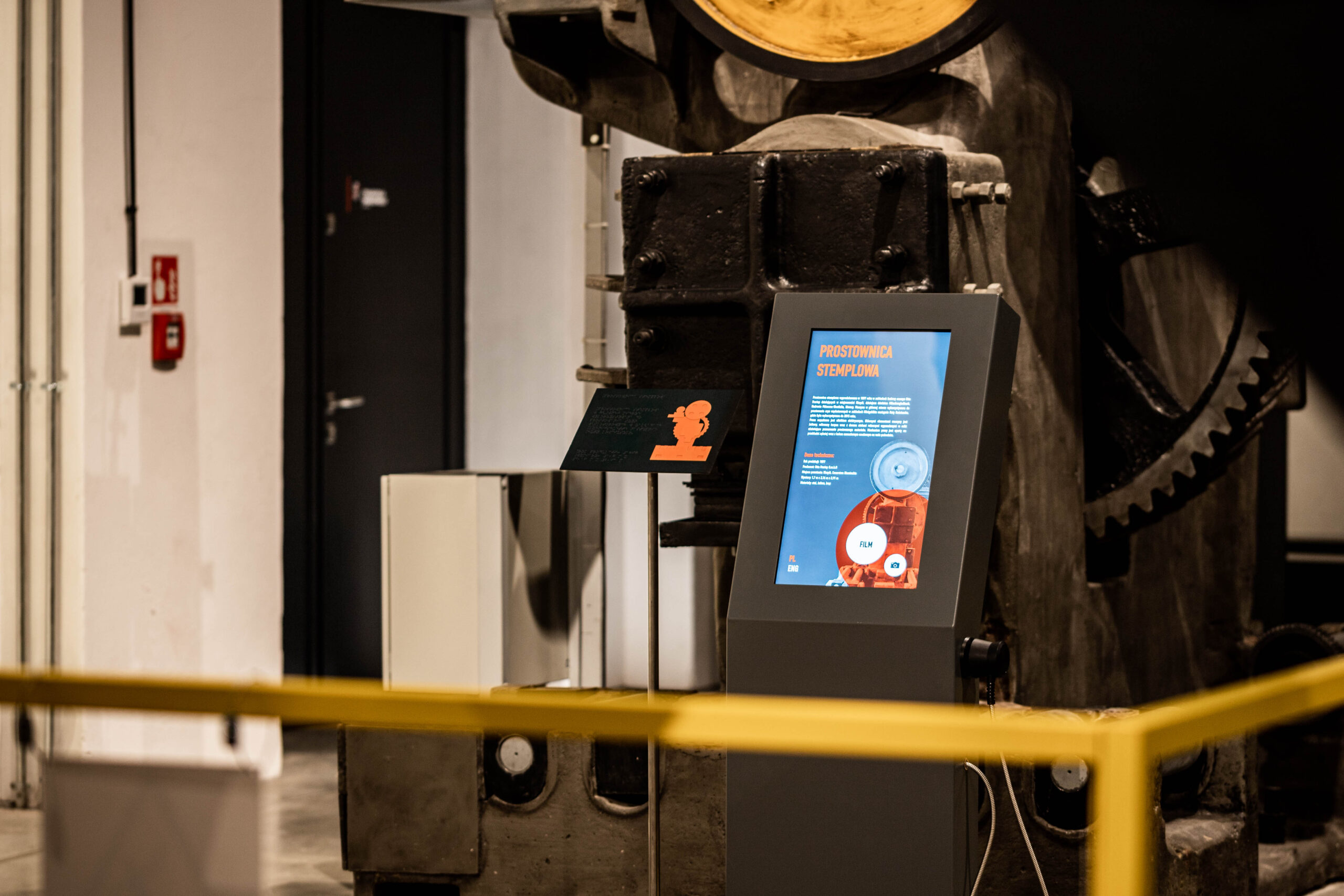
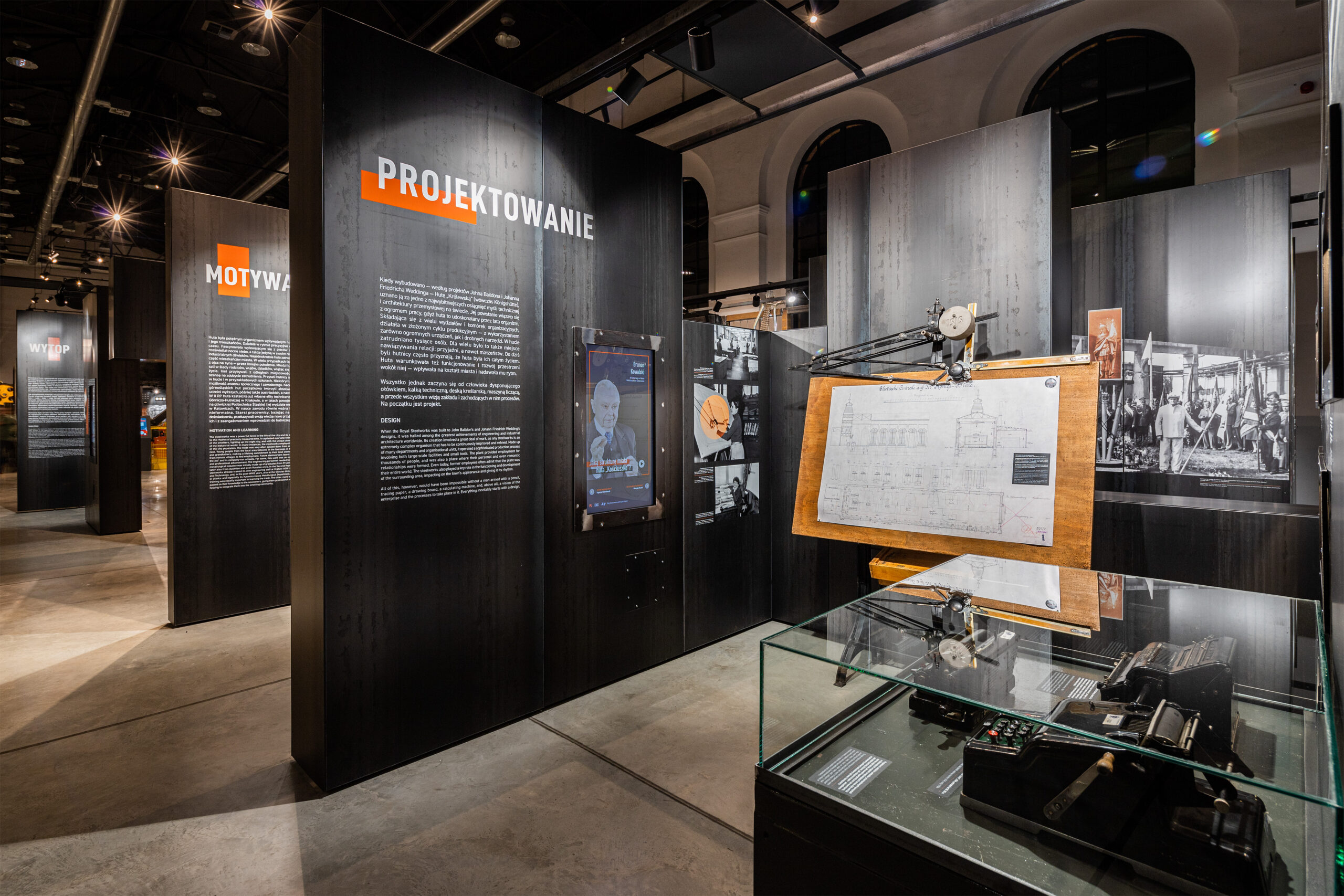
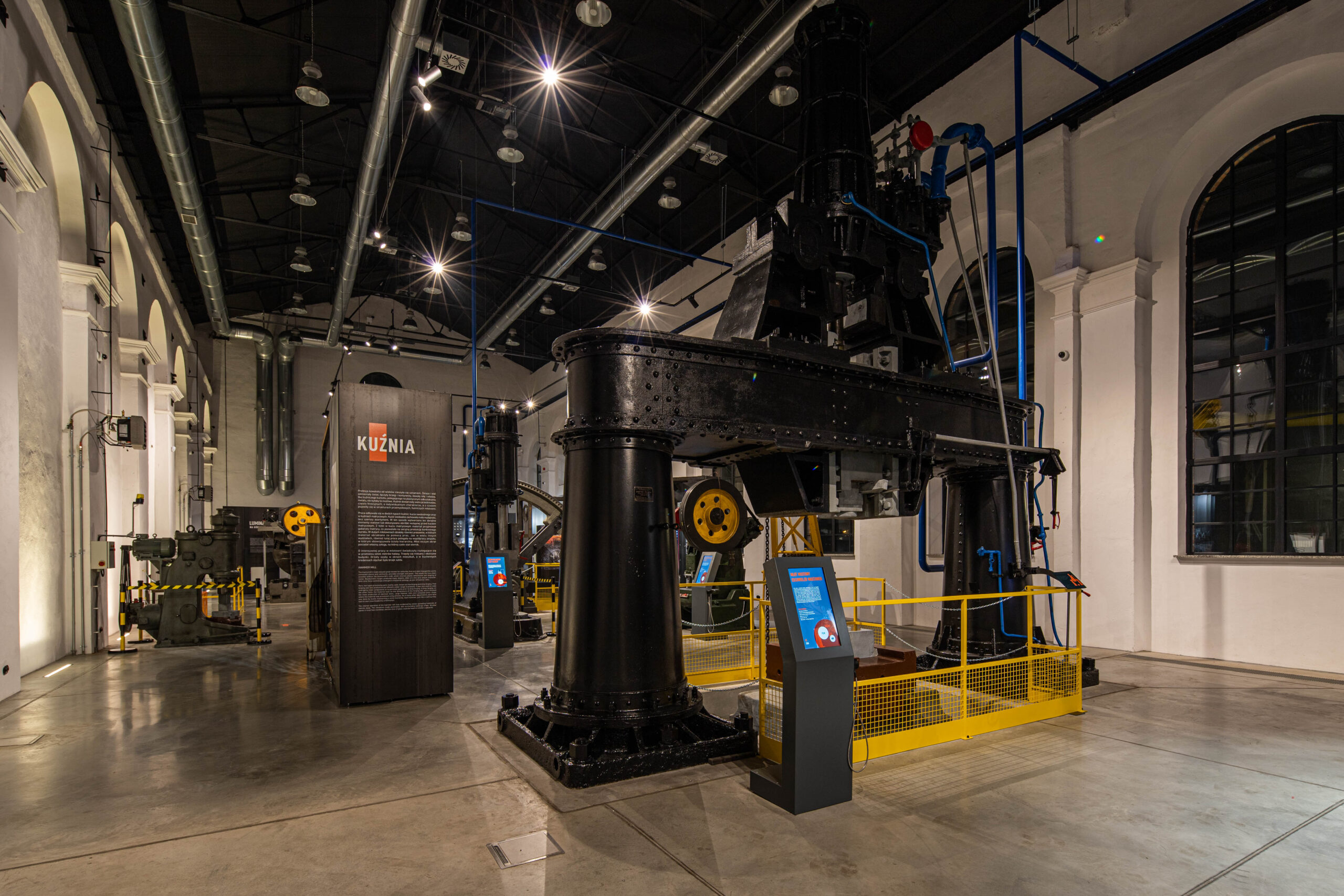
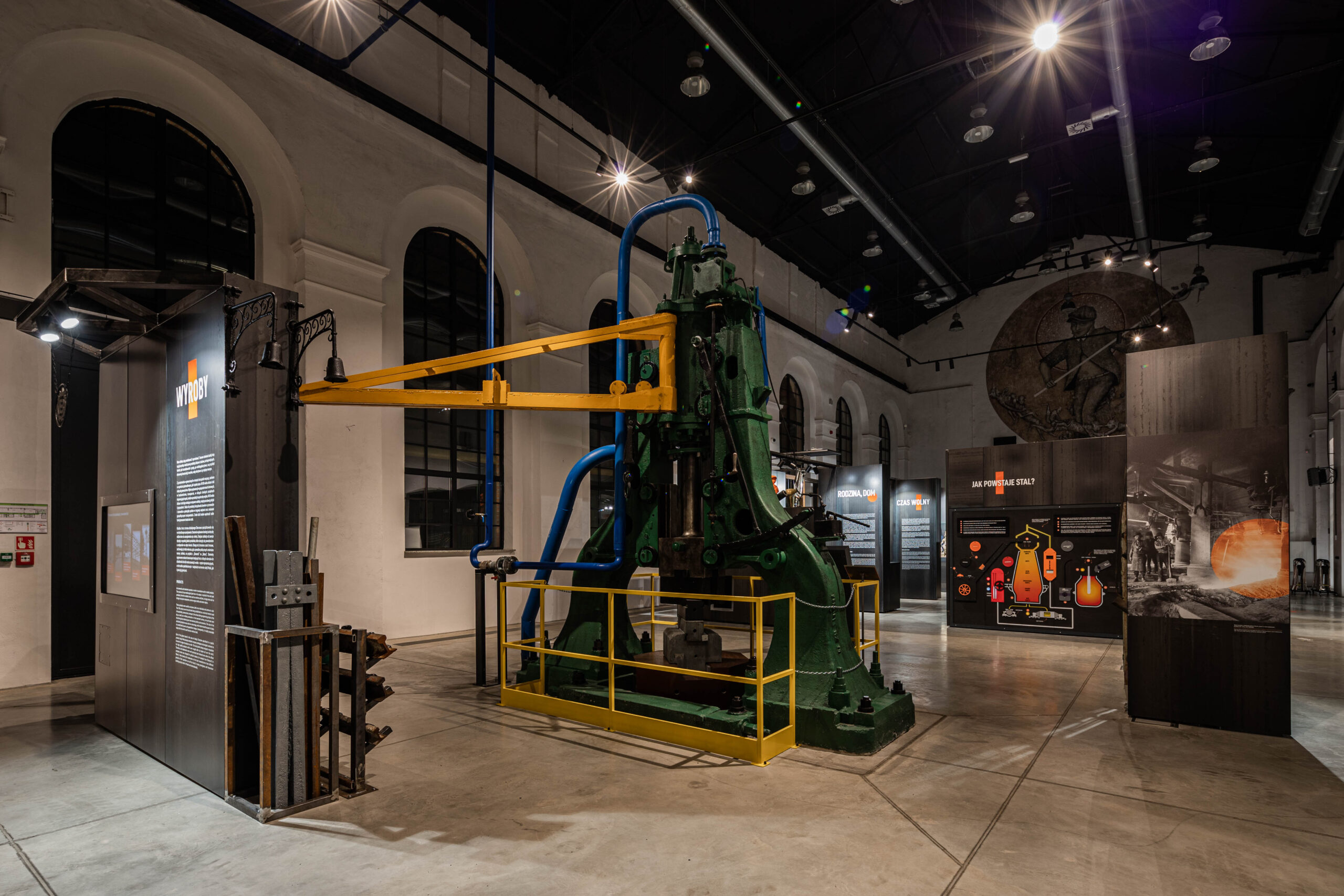
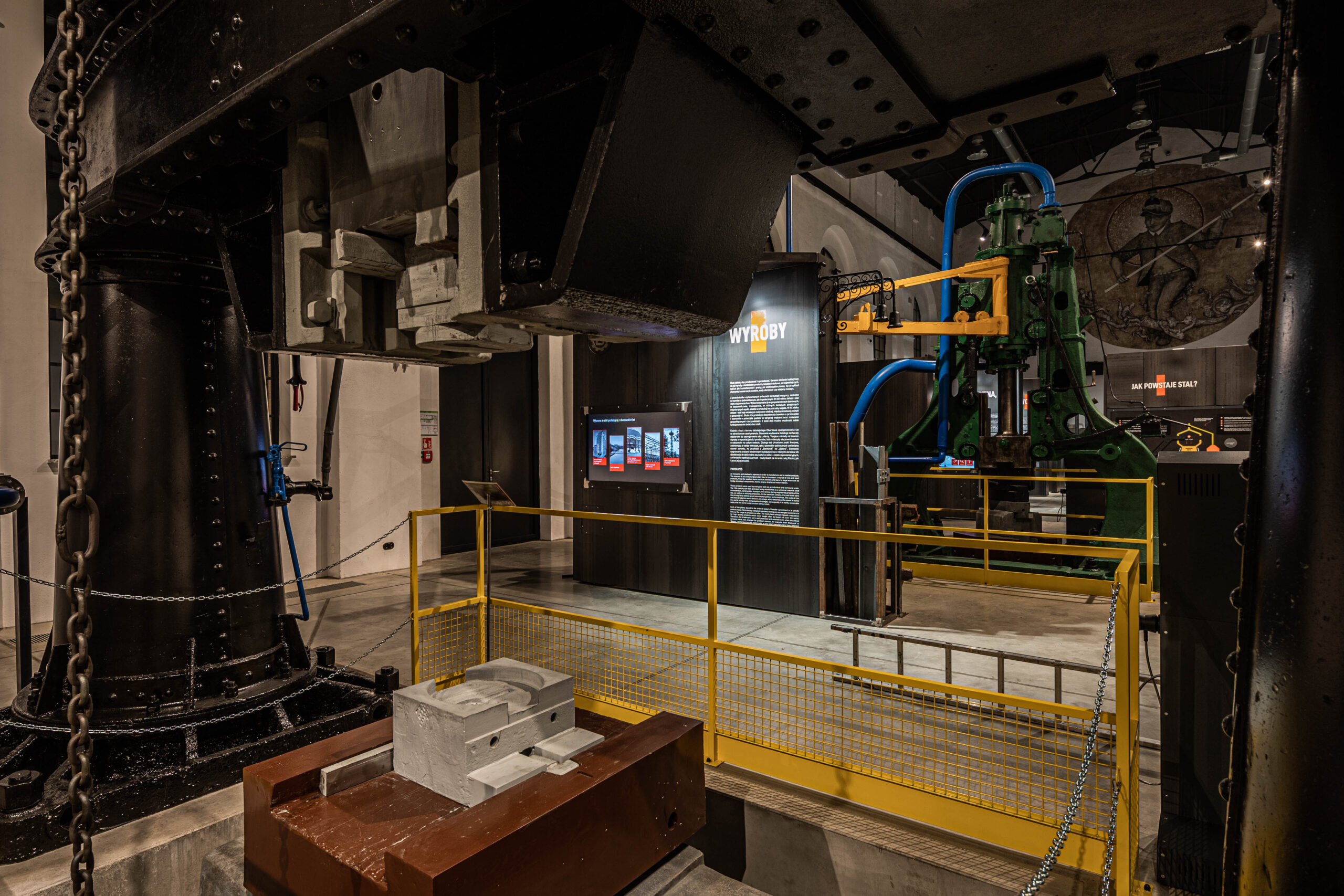
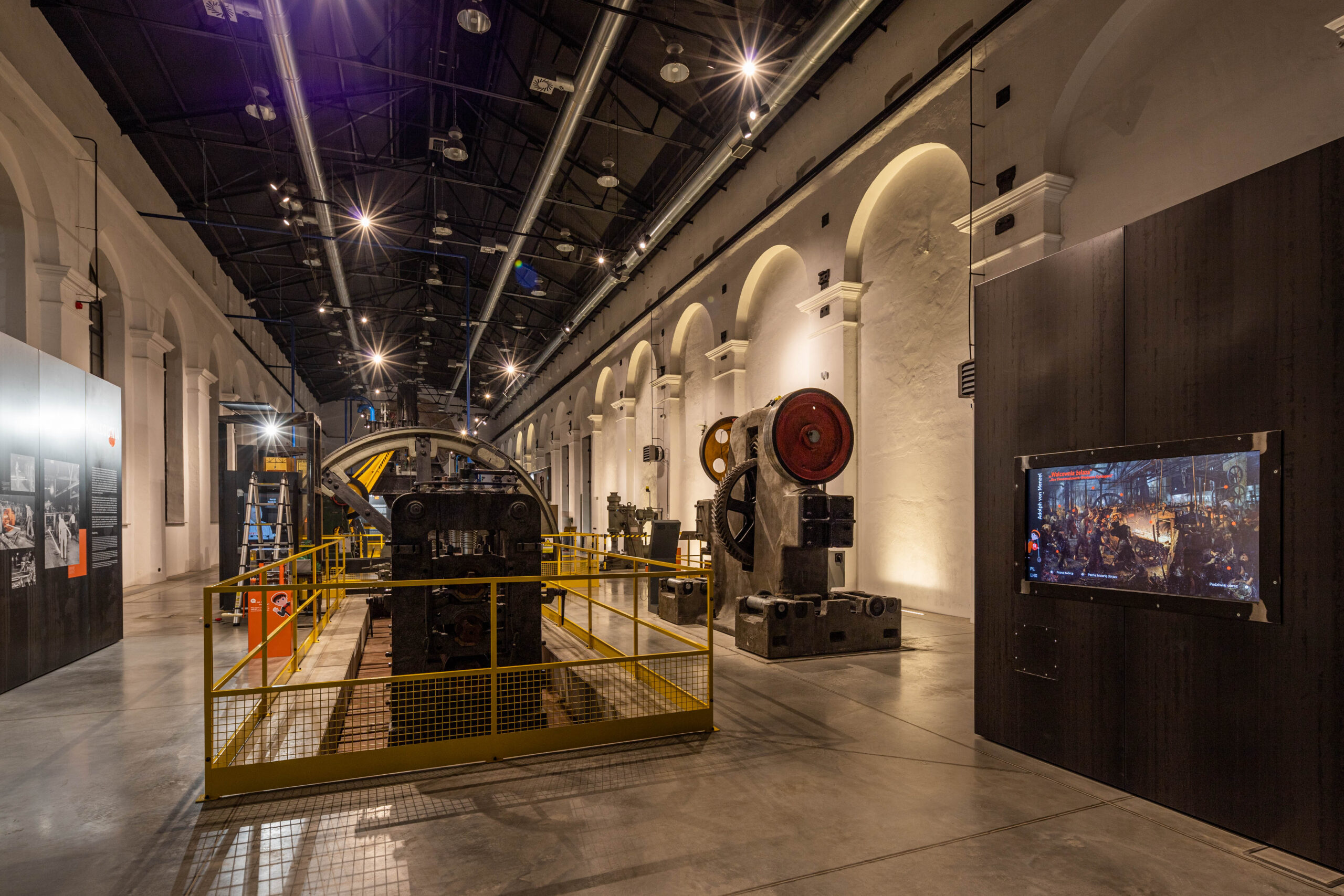
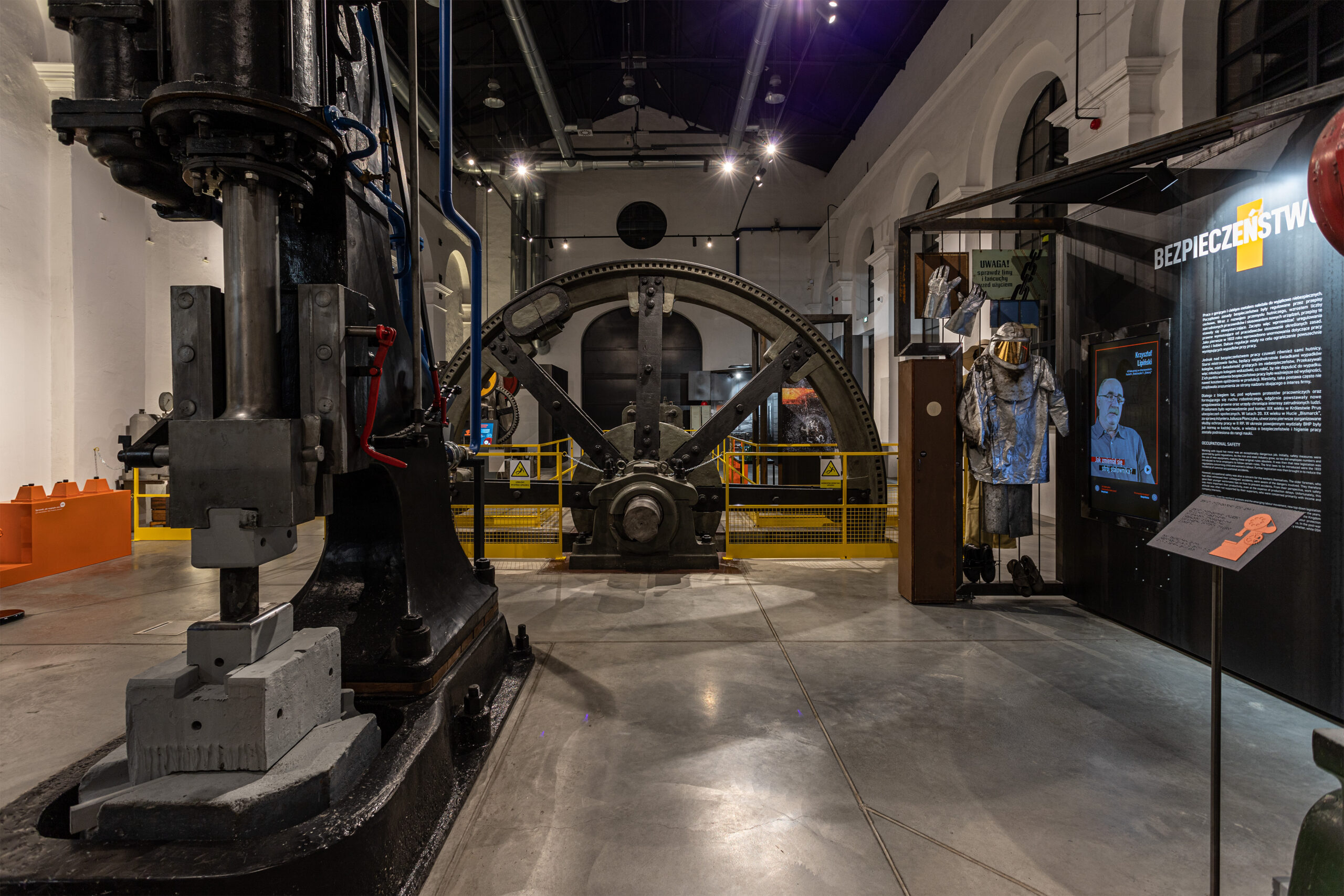
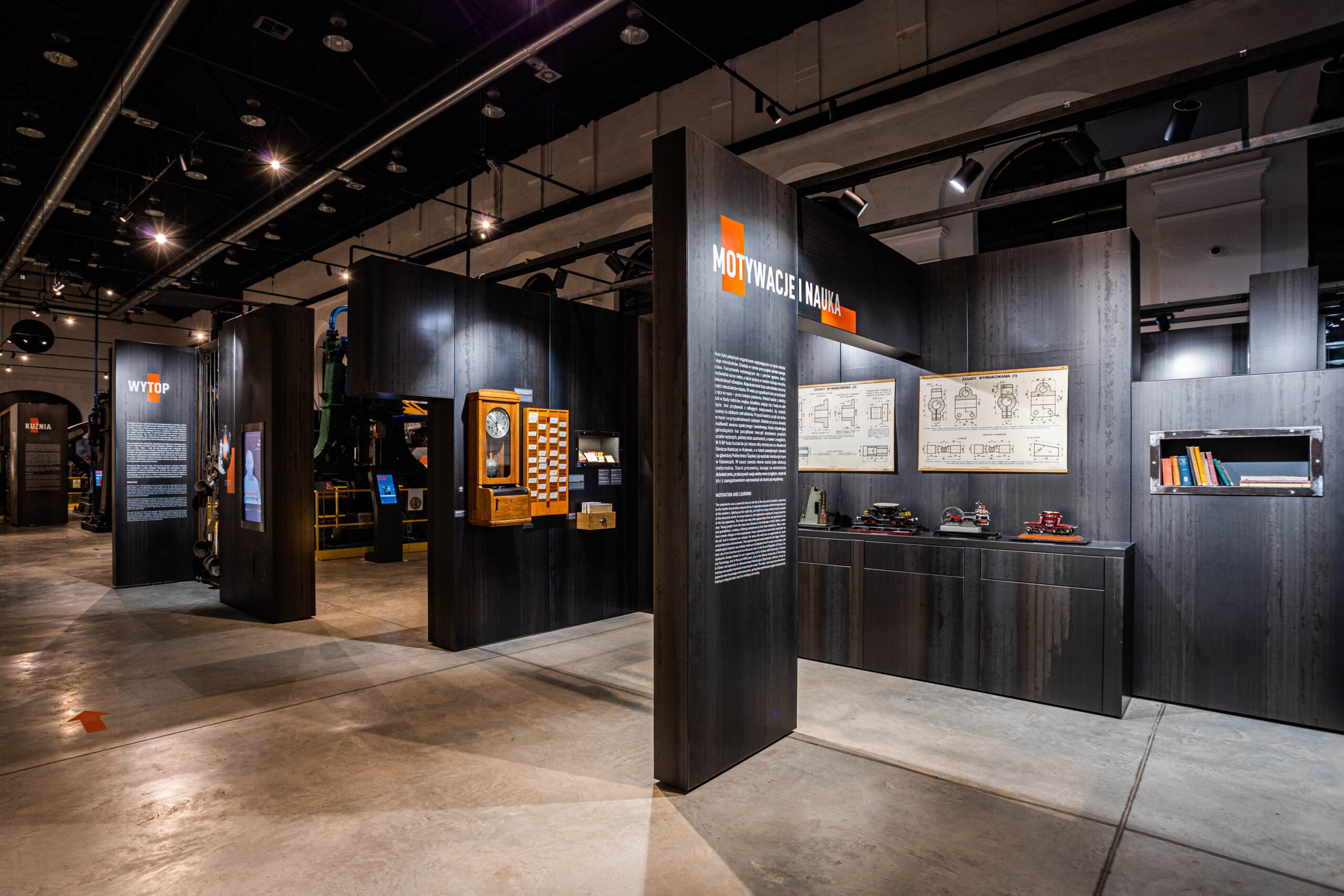
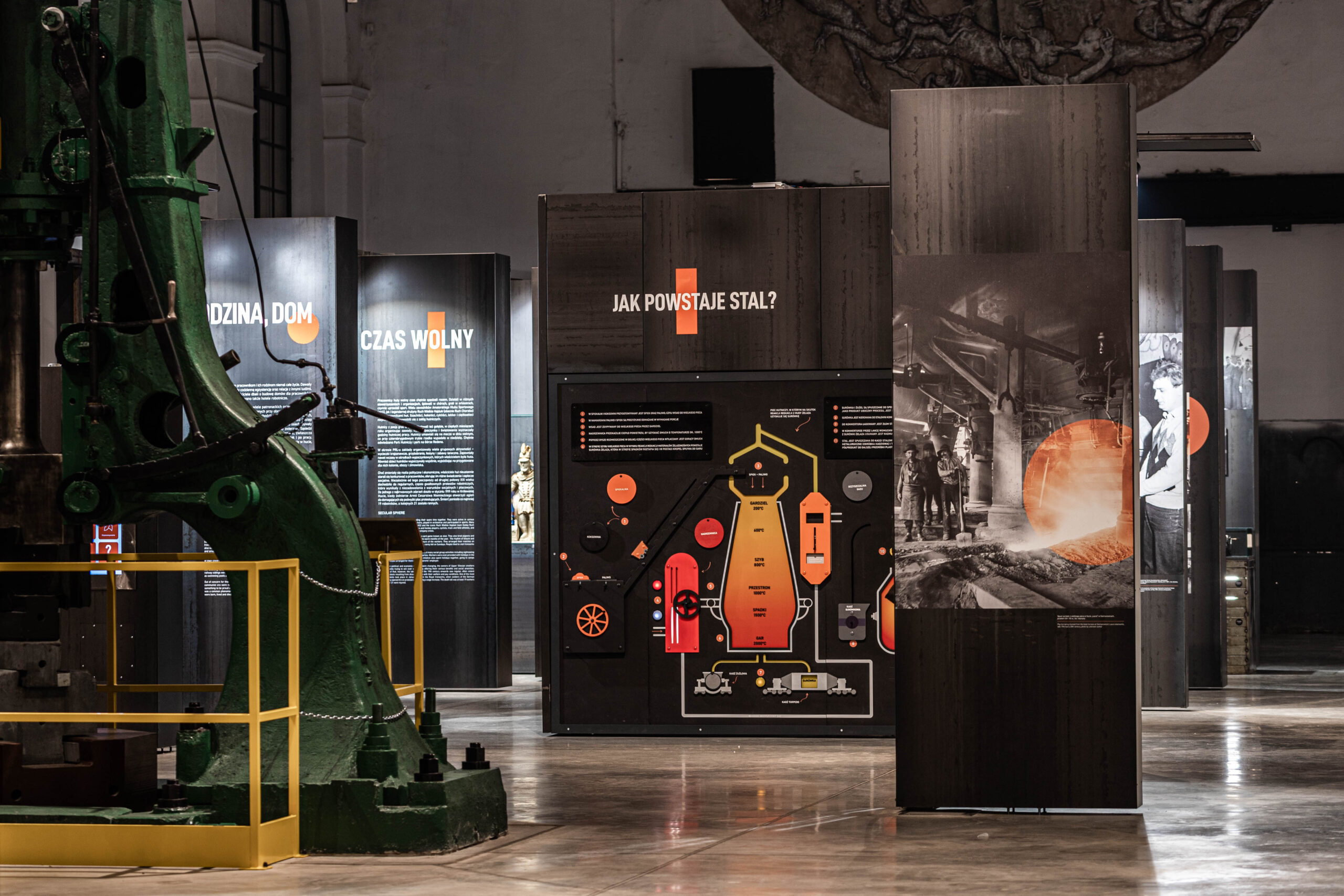
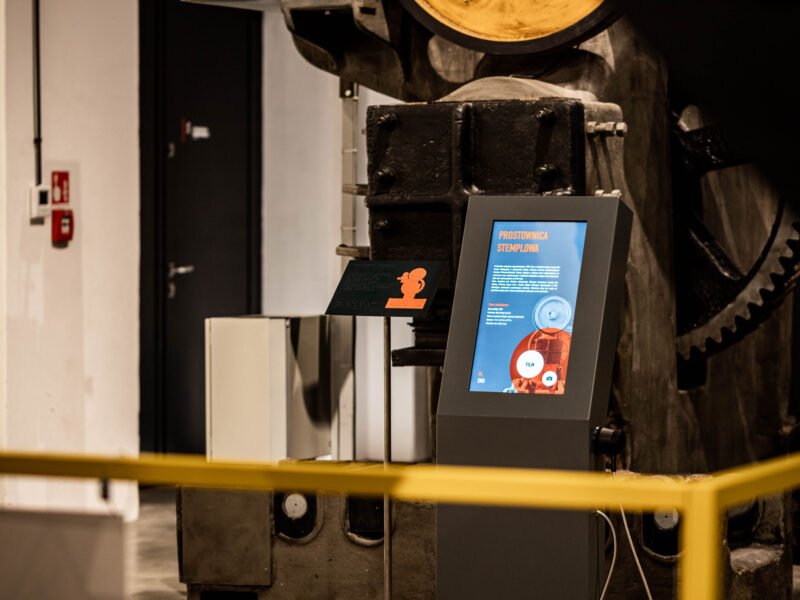
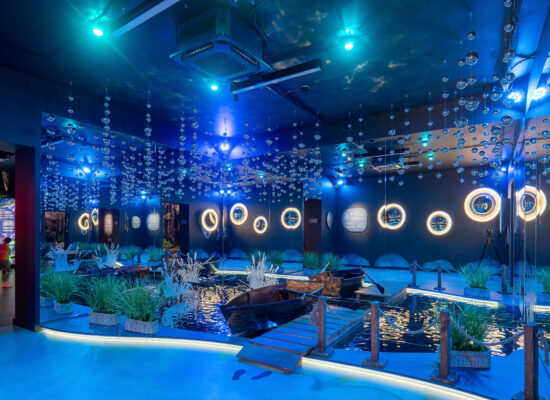
As visitors move further into the exhibition, they arrive at the Work Zone – the largest and most impressive part of the museum. This area features large-scale objects and machinery once used in steel production. The zone begins with an exhibit dedicated to the smelting process, where visitors can explore original tools such as trowels and tongs. An employee locker, repurposed as a display case, serves as an additional focal point. A 40-inch screen positioned next to the exhibit displays a video interview with a steelworks employee.
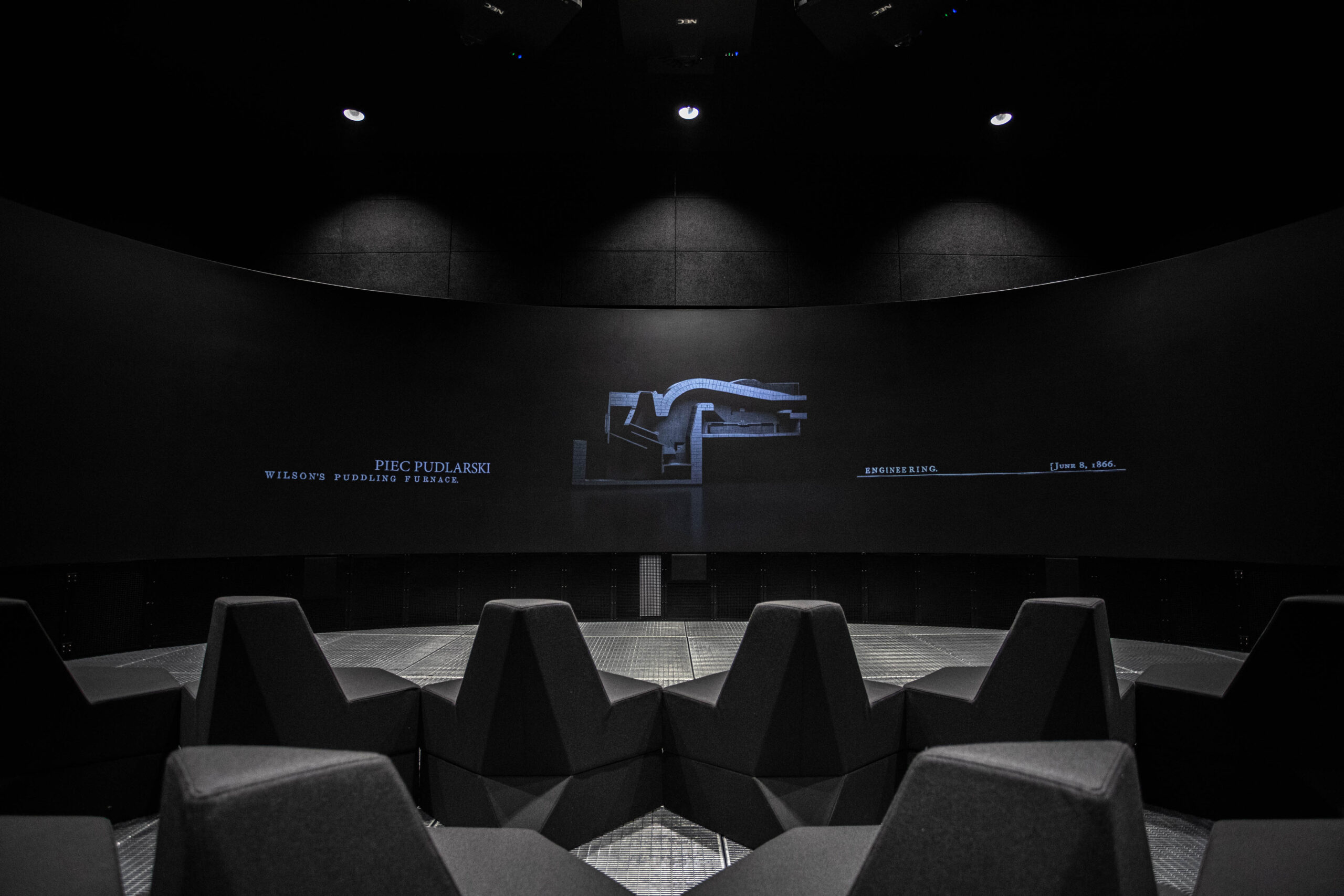
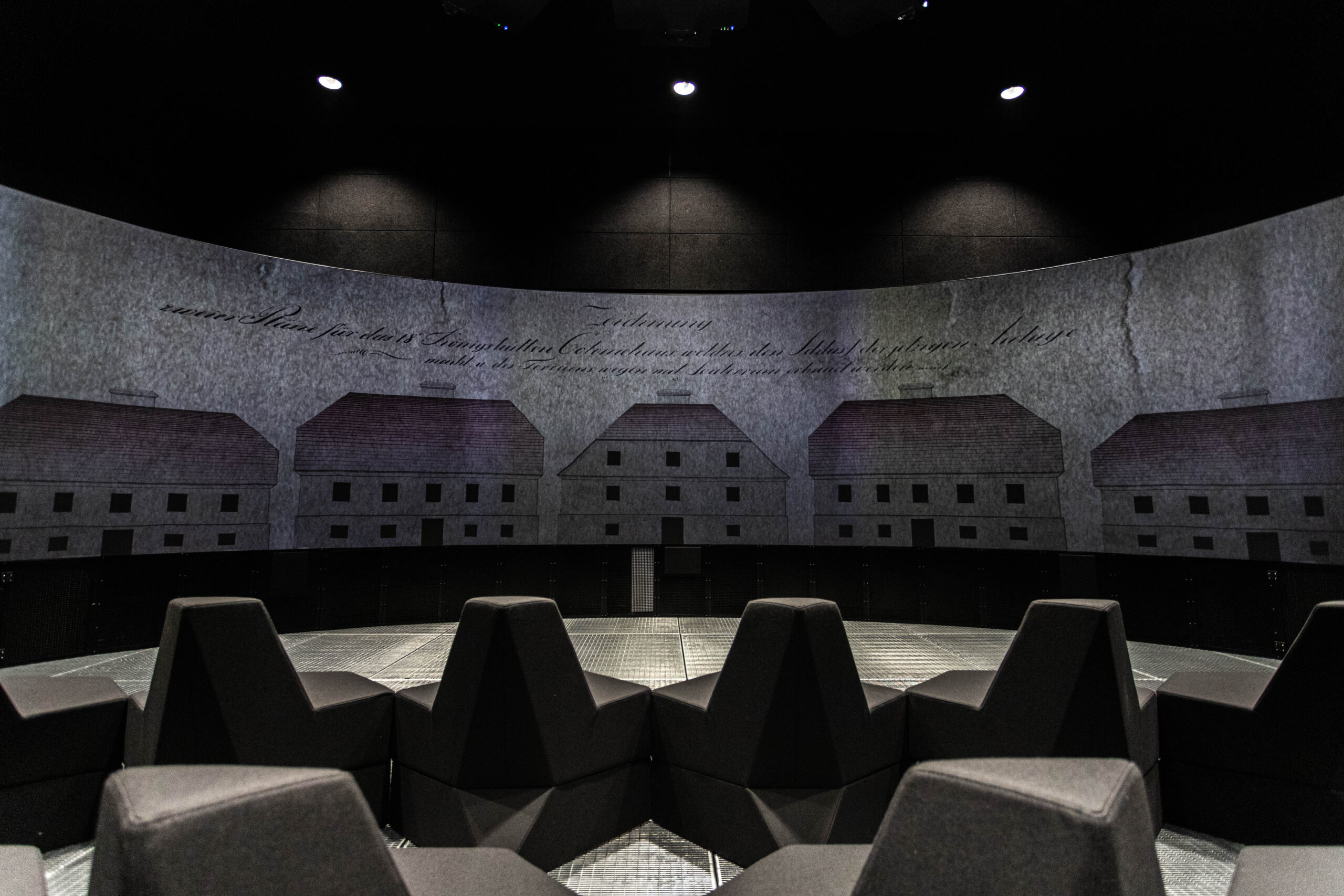
Continuing along the exhibition route, visitors enter the cinema room, which delivers a memorable experience from the very first moment. The film presented here explores the origins of iron and steel from historical, natural, and civilisational perspectives, highlighting the connections between them. It also showcases the central themes of metallurgy – fire, iron, and steel – in a visually striking way. Using state-of-the-art multimedia technologies, we created an immersive environment that engages multiple senses simultaneously. A dedicated projection structure was built across three walls and finished with specialist projection paint. The content is displayed using five projectors that employ projection mapping and edge-blending technologies, bringing the entire room to life.
An additional element of the presentation is a dynamic soundtrack featuring narration and sound effects that complement the events unfolding on screen. Audio is delivered through a dedicated effects sound system. The installation is not only a spectacle of light and sound but also of scent, further enhancing the visitor experience. Specialised timeline-based software integrates and synchronises audio and video systems, effect lighting, smoke machines, and scent emitters (including the smell of burning materials). The combination of diverse media and cutting-edge multimedia technologies enriches the educational value of the installation.
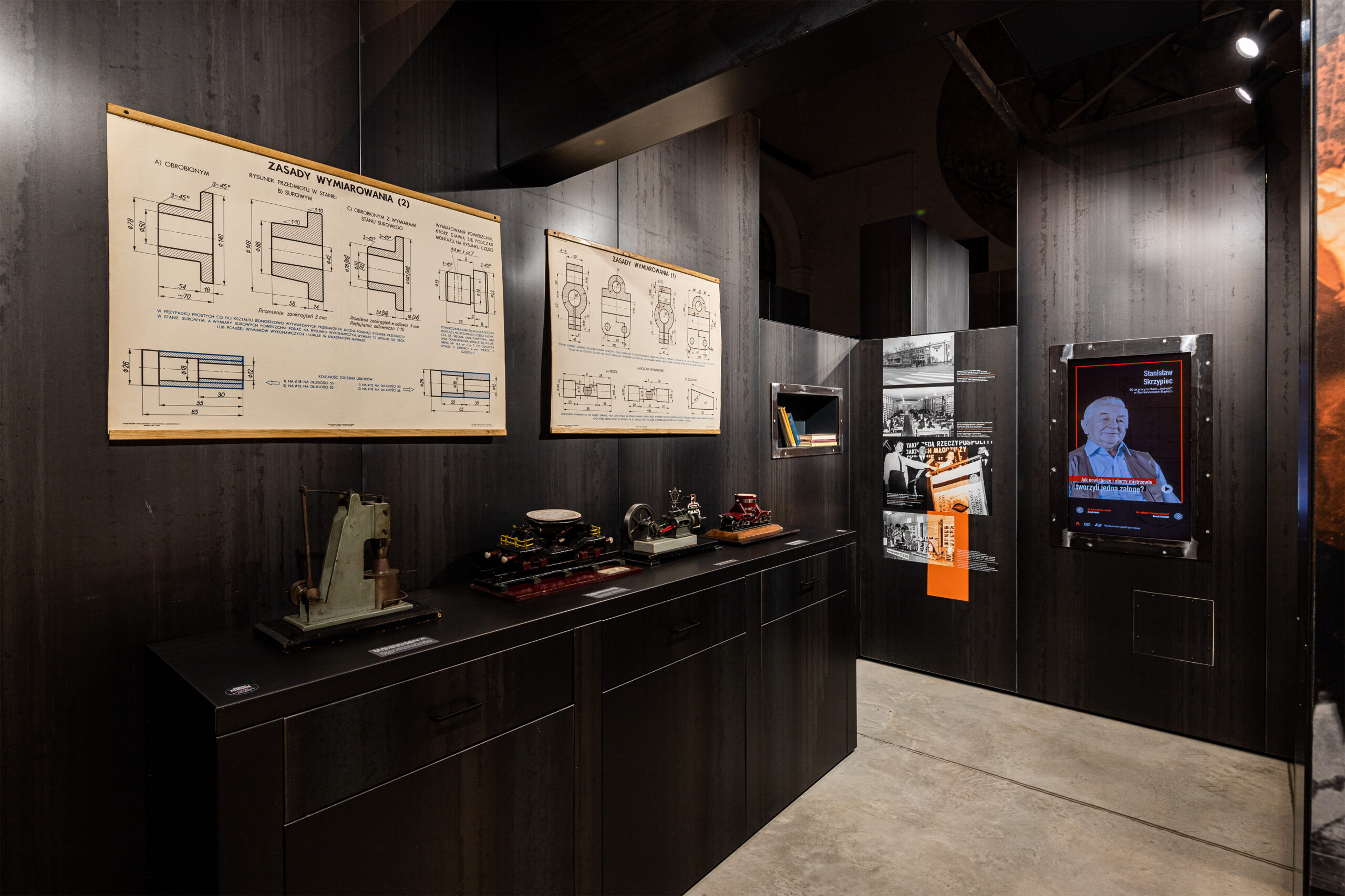
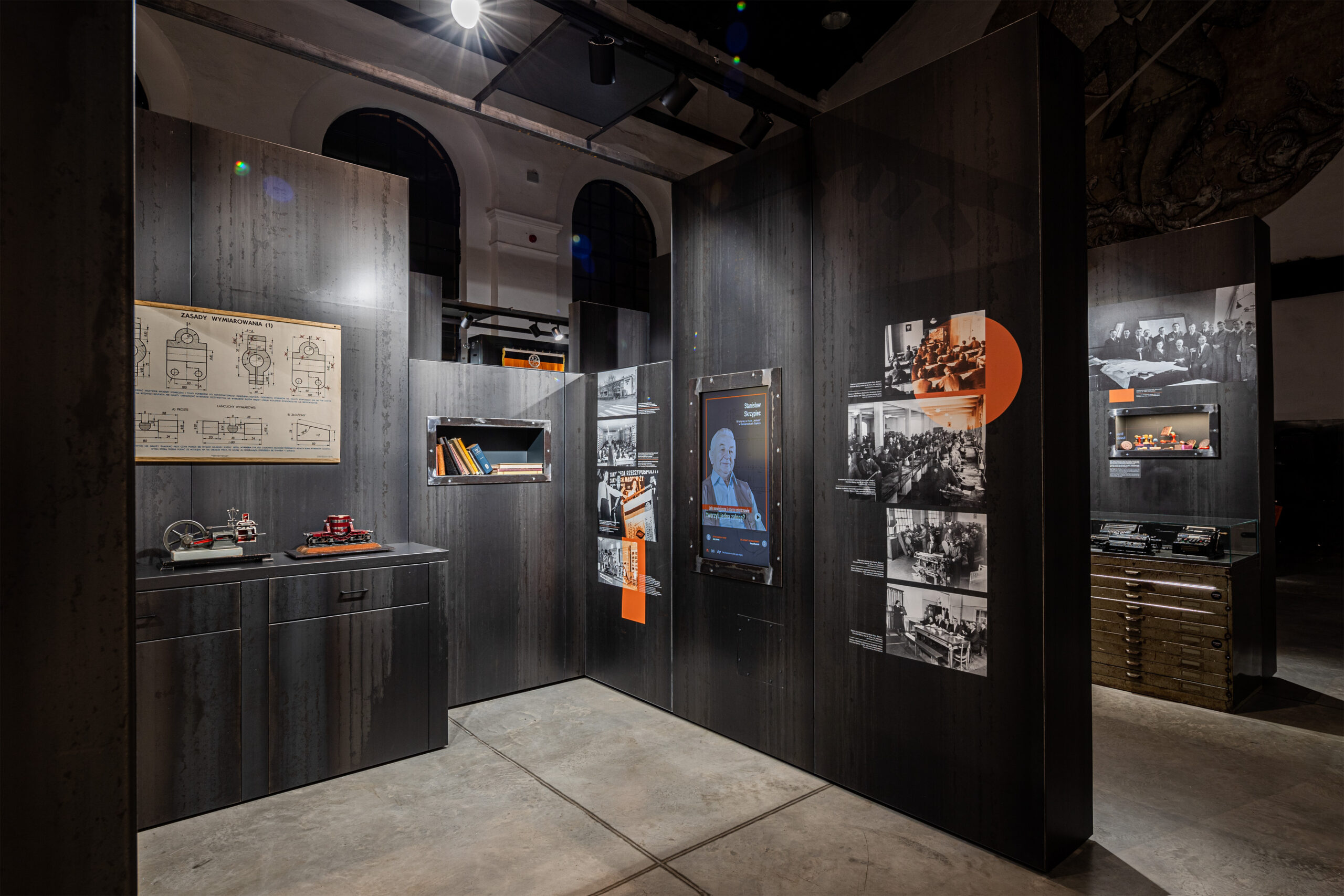
In the next gallery, visitors can view original forging tools, including blacksmith’s tongs and handling chains. An employee locker converted into an opening display case is another key feature of the arrangement. Visitors can learn more through printed materials, technical diagrams, and an interview with a steelworker presented on a 40-inch screen.
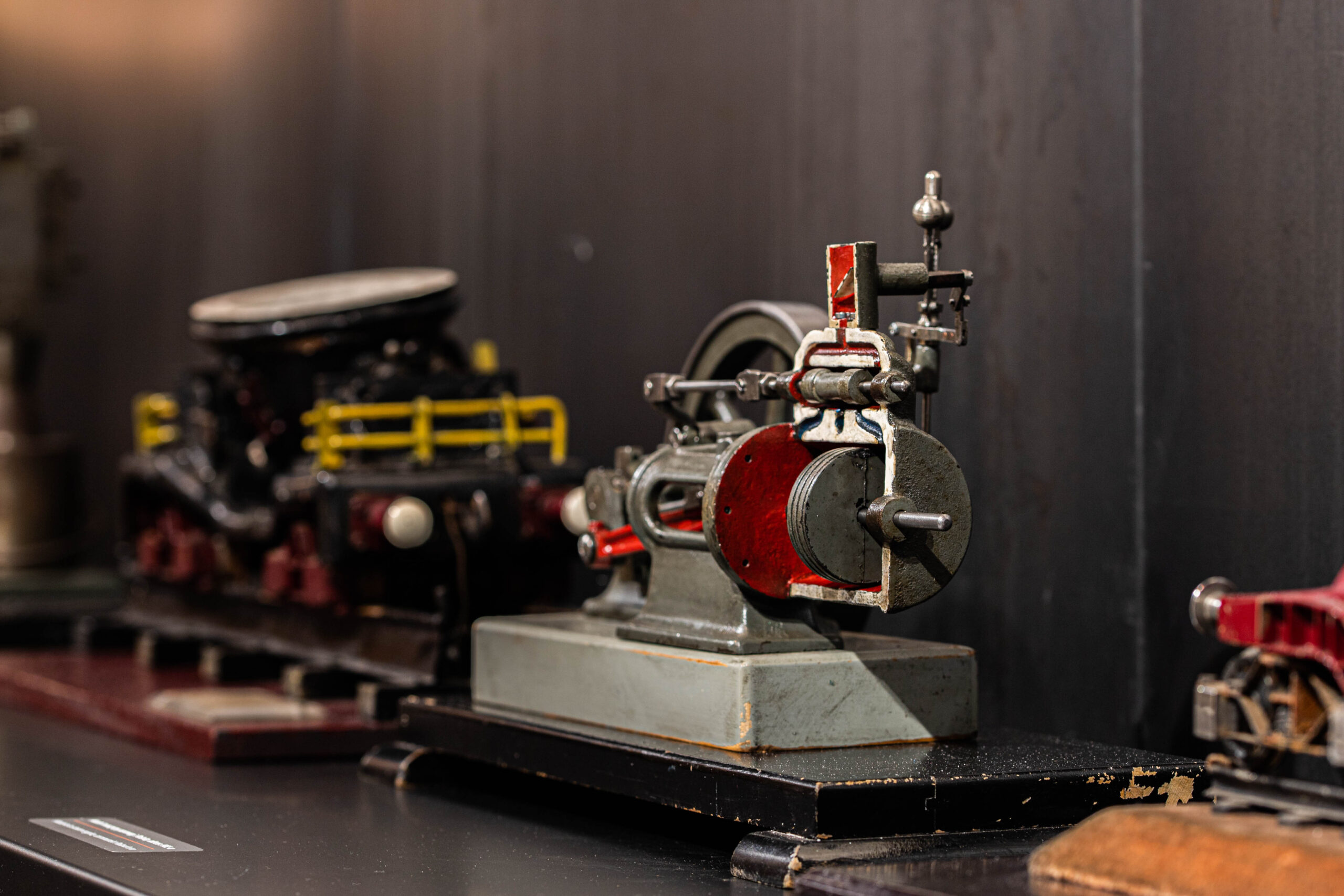
The next exhibit is dedicated to the laboratory. This area features models of machines such as a tensile testing machine and a Charpy impact tester, used to examine the brittleness, strength, and other technical properties of steel.
Visitors can also learn more about the pioneers of the steel industry. The central element of the exhibit is a screen displaying films about notable figures associated with metallurgy. Seating has been provided to allow visitors to rest and comfortably watch the recordings. One particularly distinctive feature is a fragment of a monument – a bust of Count Friedrich Wilhelm von Reden, who was appointed Director of the Higher Mining Office in Silesia in 1779 and played a significant role in the region’s economic development. The wall next to the bust is decorated with graphics depicting other individuals who contributed to the growth of metallurgy in Silesia. On the outer side of the structure, visitors can interact with a 55-inch touchscreen application presenting information about Adolph Menzel’s painting Das Eisenwalzwerk (“The Iron Rolling Mill”), which depicts steelworkers producing railway tracks.
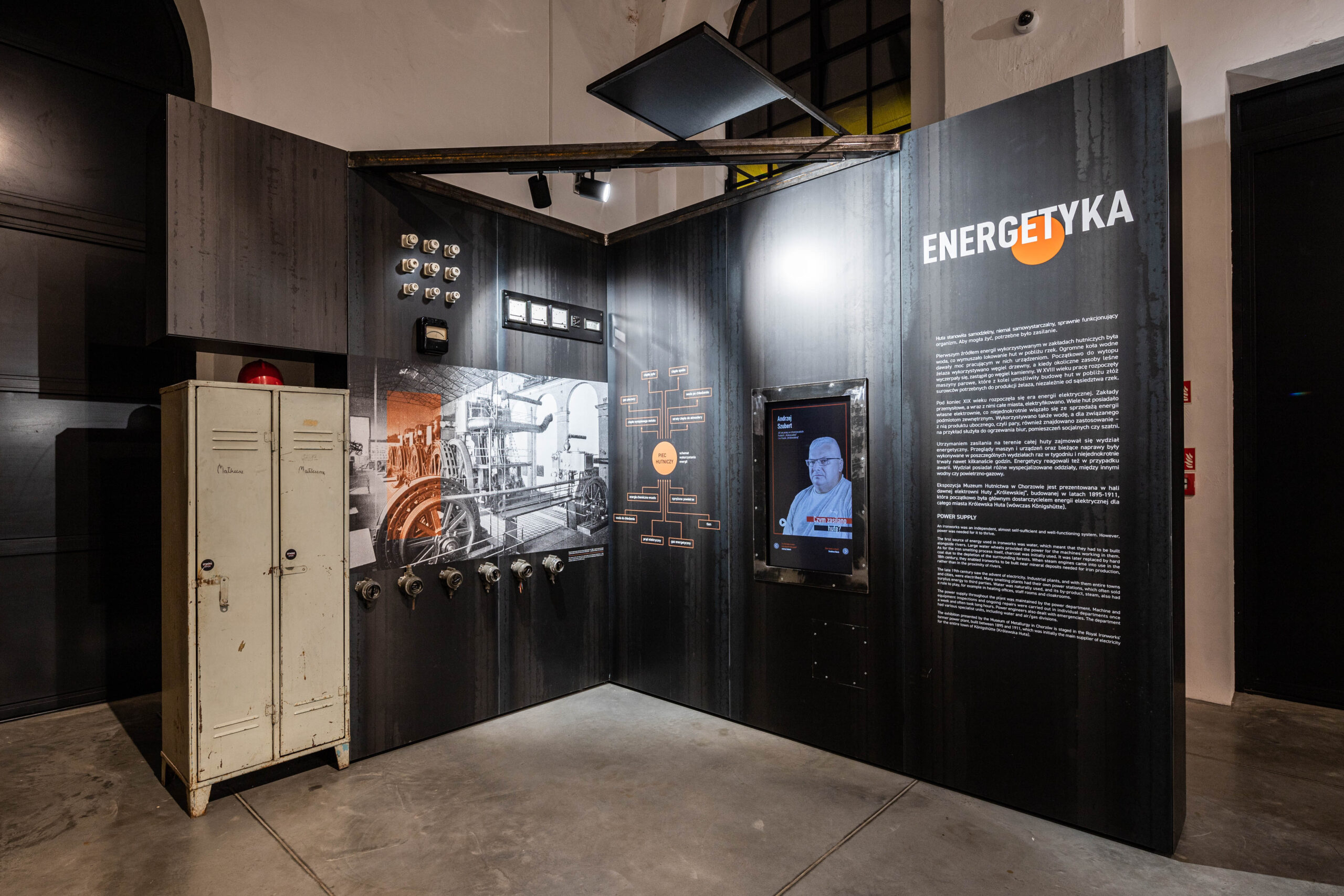
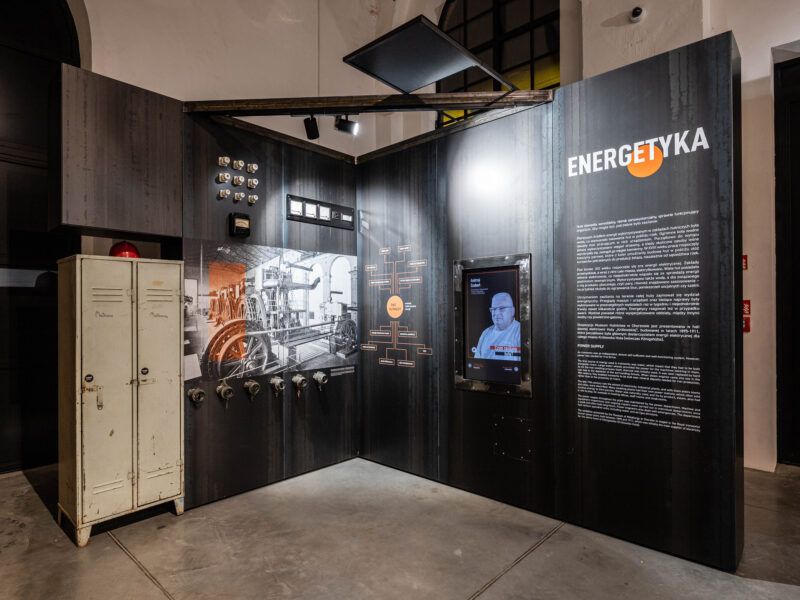
The next stop on the museum route is the exhibit dedicated to power generation. It features a display wall showcasing various electrical measuring instruments, including voltmeters and ammeters, as well as other artefacts such as an electric gong and original lighting fixtures. The exhibit also includes an employee locker serving as a display case and a 40-inch screen showing an interview with a former steelworks employee.
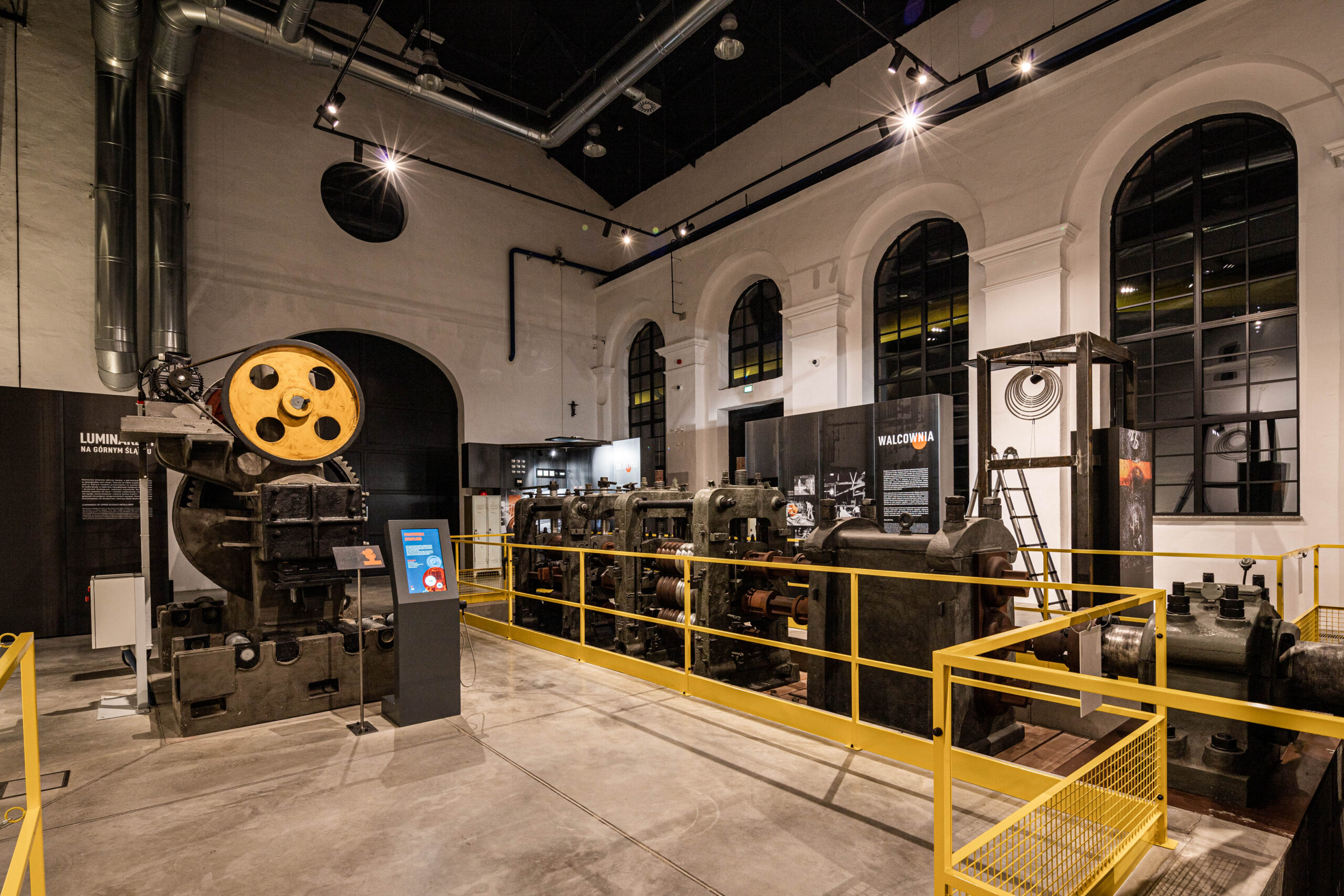
The central element of the following exhibit is a rolling mill model. This large machine was once used to reduce the thickness of processed materials. The display also includes several smaller models mounted on lockers. One of them has been designed with a hand crank, allowing visitors to operate the mechanism themselves. Additional elements include an employee locker converted into an opening display case, large-format graphics, and a 40-inch screen presenting an interview with a steelworker.
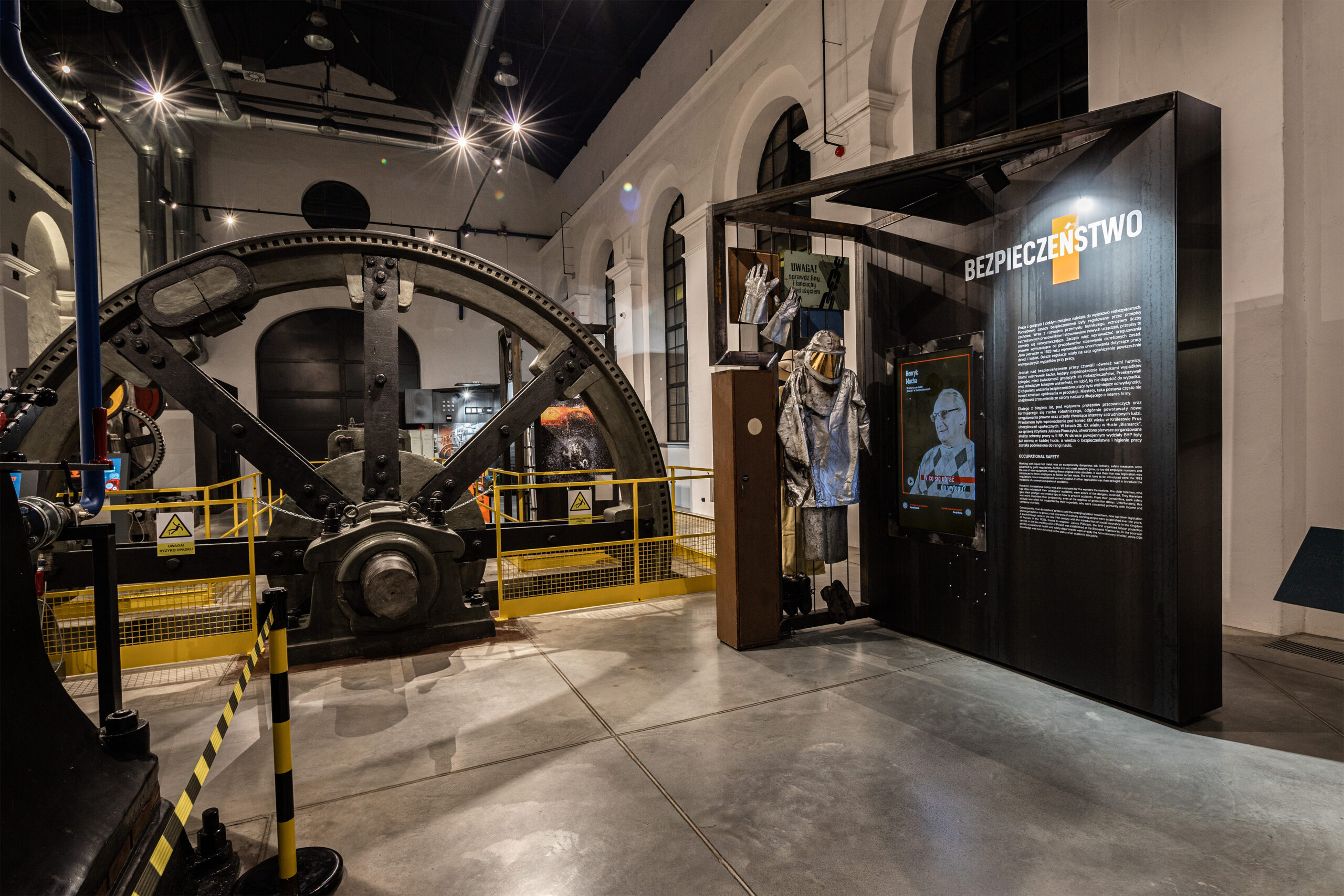
The workplace safety exhibit centres around a screen displaying thematic video content. Surrounding it are original factory warning and information signs. A particularly interesting feature is the display of protective clothing and a firefighter’s helmet. Visitors can also explore the history of workplace safety at the steelworks by browsing manuals and accident records.
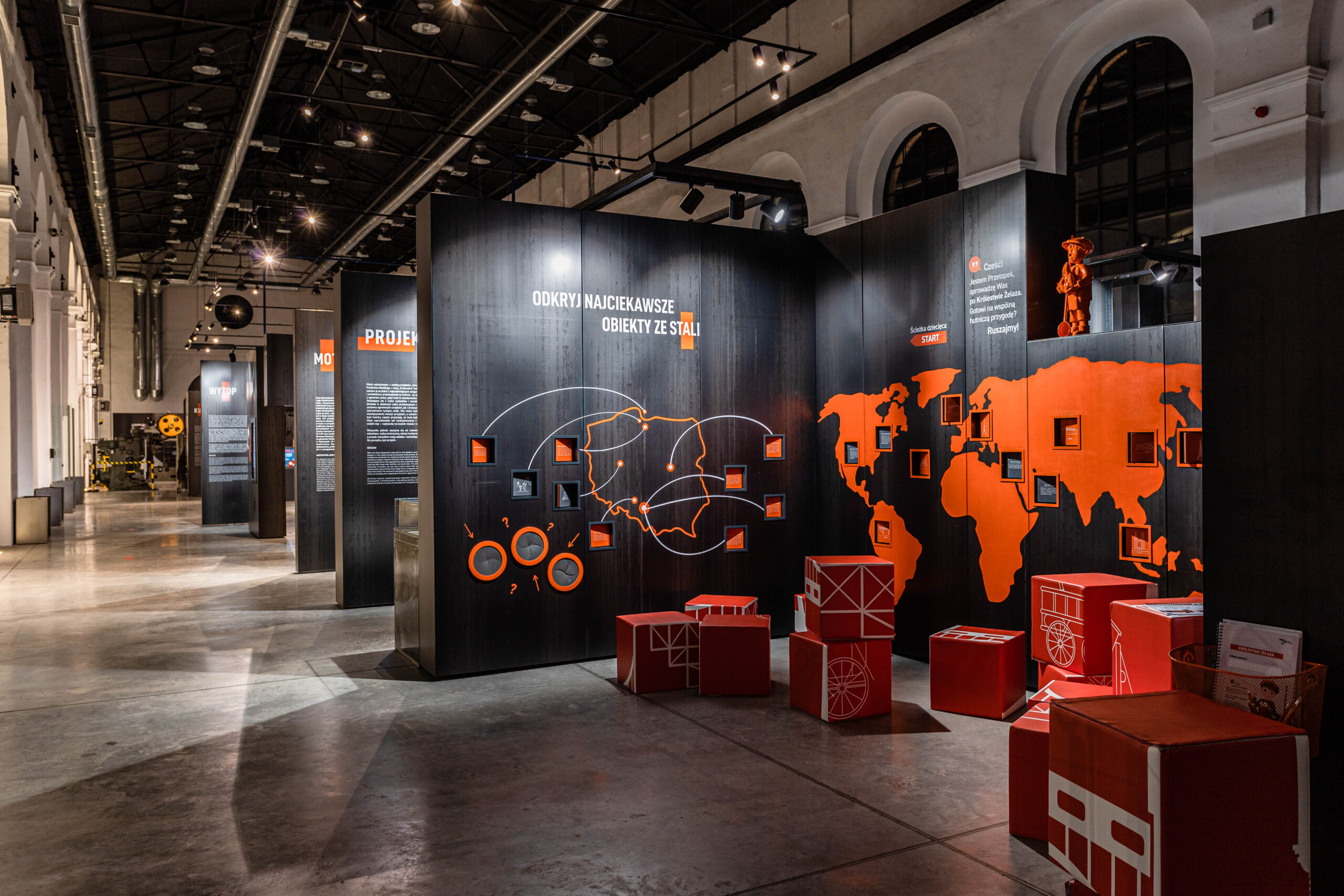
Visitors then arrive at the products exhibit, where the main feature is a 55-inch interactive screen presenting thematic films. Around the screen are reproductions of pages from steel product catalogues describing items such as pipes of various diameters, angle sections, T-sections, and other steel products. A display shelf showcases smaller products manufactured at the steelworks. On the adjacent wall, visitors can view infographics illustrating Chorzów’s steel export routes as well as information about the evolution of the company’s trademarks.
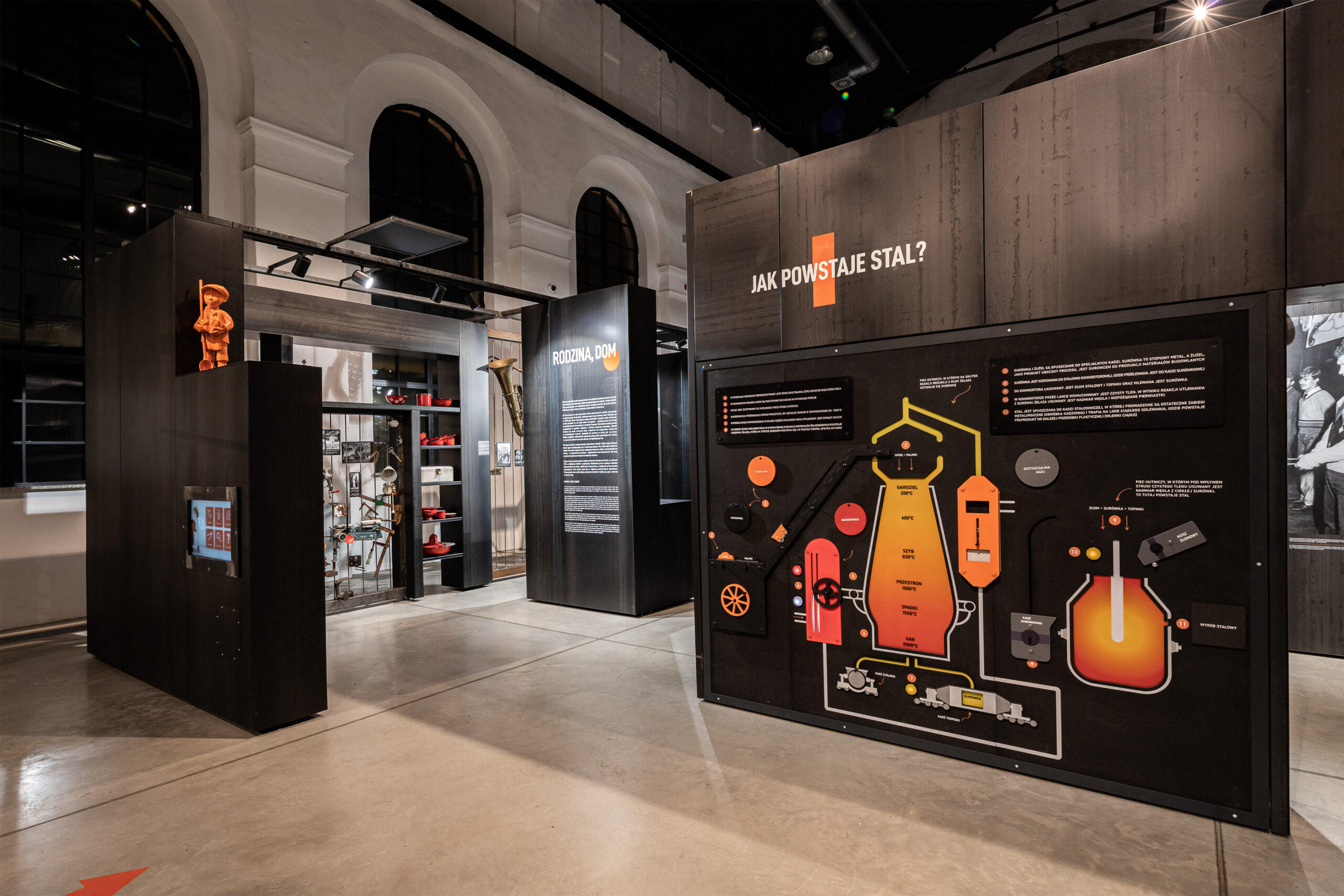
After exploring the exhibits dedicated to work at the steelworks, visitors return to the Life Zone. Here they can discover an exhibition focused on the family life of former steelworks employees. The space features a collection of everyday household items, including kitchenware, domestic tools, and gardening equipment. The arrangement is complemented by printed materials and a 40-inch screen displaying an interview with a steelworker.
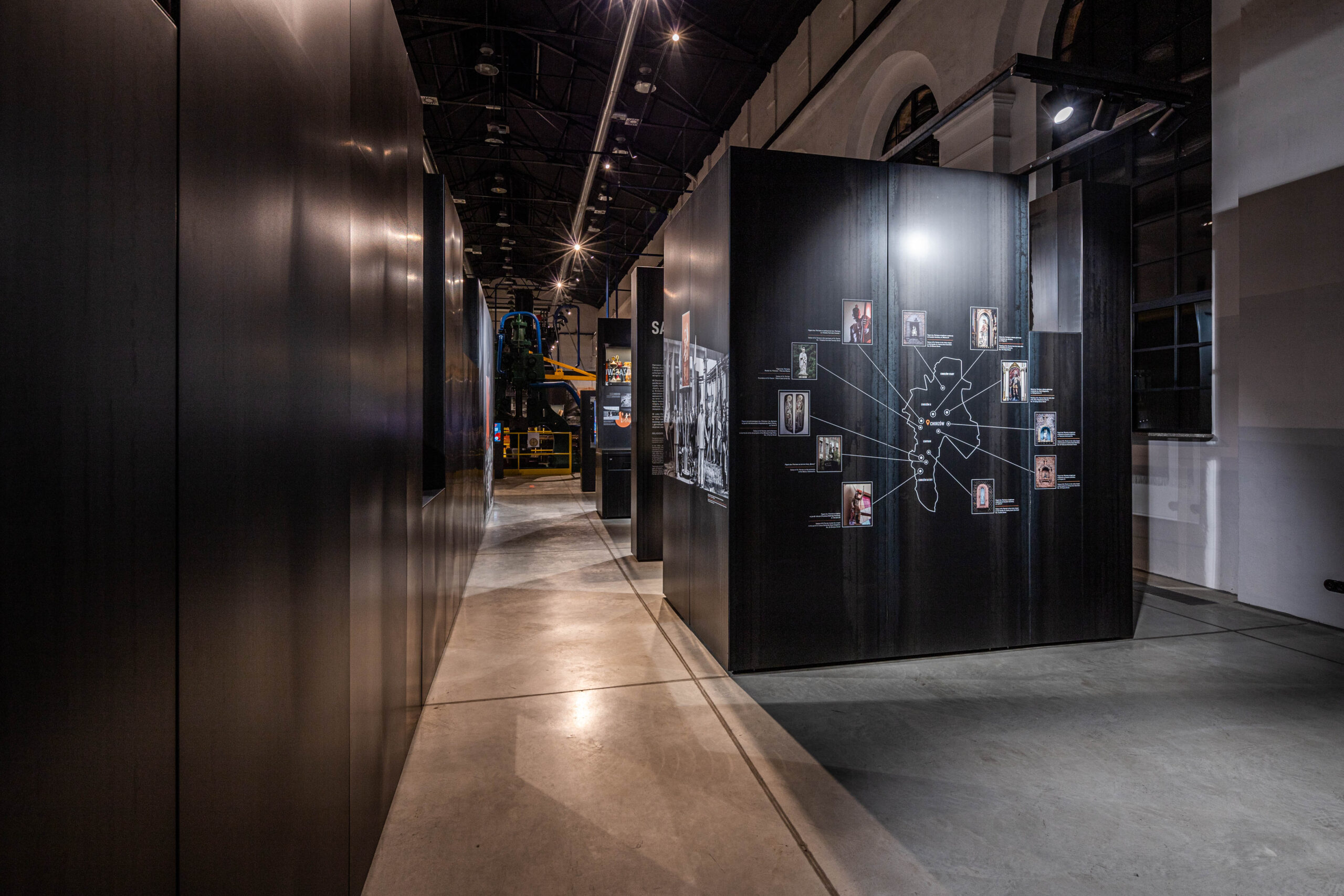
The museum also includes an exhibition dedicated to leisure time. The profanum section tells the story of the steelworks orchestra through original instruments and a ceremonial uniform. Sports memorabilia related to the Ruch Chorzów football club – trophies, pennants, albums, and club chronicles – are also on display. The sacrum section features a sculpture of Saint Florian, the patron saint of steelworkers, alongside steelworks banners. Stories about private life are further enriched by interviews with former steelworks employees presented on 40-inch screens.