How a modern hybrid lecture hall builds the prestige and future of today’s university
Digital reality
Higher education in Poland is undergoing its most significant transformation in decades. This is not the result of a passing trend or simply a technological necessity. Rather, it is driven by the rapid digitalisation of the labour market and the arrival of a new generation of students. Young people, shaped by the digital world, expect the same from education as they do in everyday life – dynamism, interactivity and flexibility.
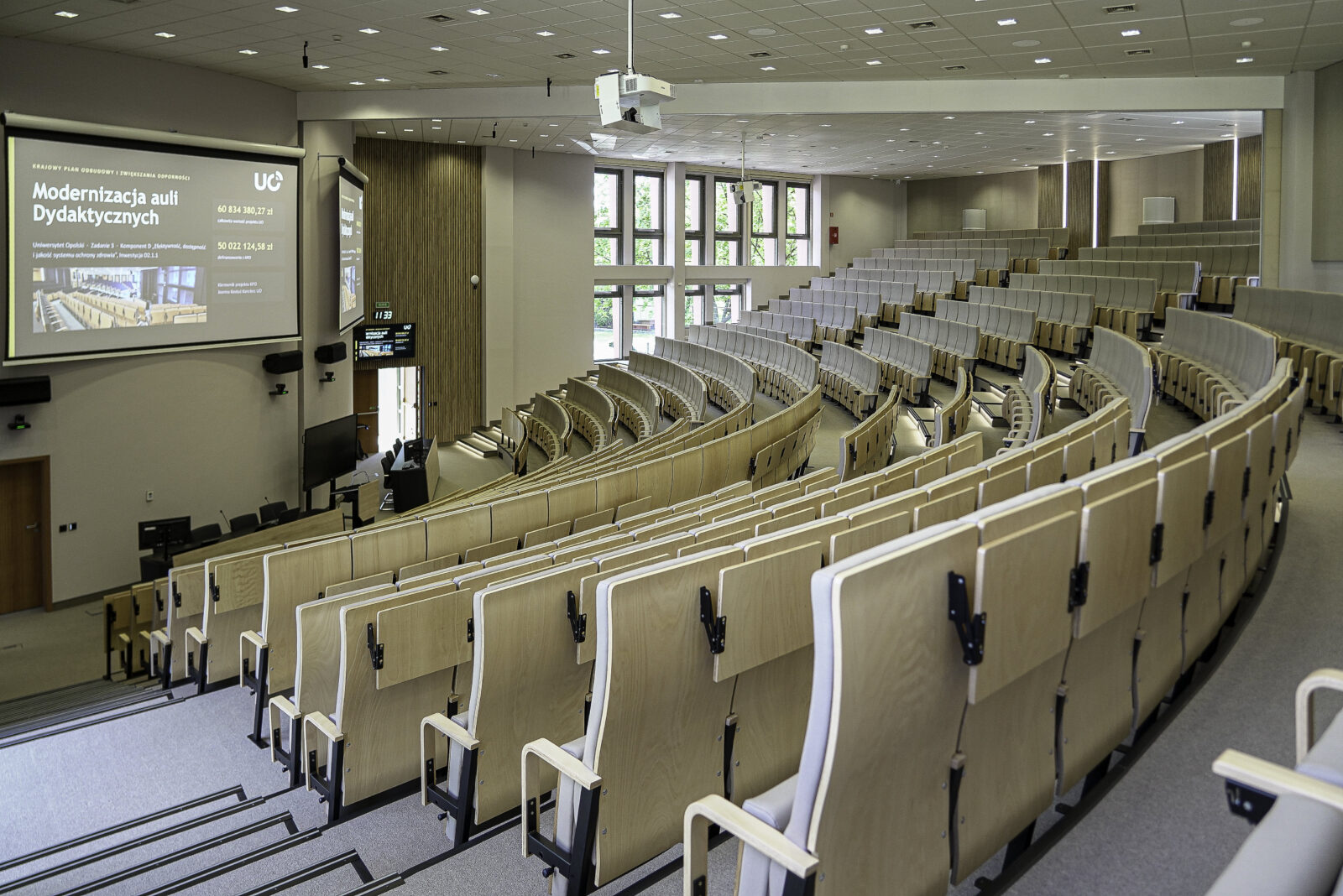
In this environment, the traditional lecture hall – associated with rows of wooden benches and a monotonous voice coming from low-quality speakers – is gradually becoming a thing of the past. Its successor is the modern hybrid lecture hall. It is worth treating it as a tool for building a university’s prestige and competitive advantage.
Three levels of challenges facing today’s university
Transforming learning spaces is not just about aesthetics. It is a strategic response to three key challenges that directly influence a university’s image, student recruitment and retention:
Maintaining engagement and reducing drop-out rates
One-way, passive lectures are becoming less effective. Students expect clear materials, dynamic content presentation and interaction – experiences they already know from their everyday digital environment.
Equal experience for all participants
Hybrid education cannot mean that a student joining from a computer feels like an observer watching the lecture through a keyhole. The quality of participation, visibility of details and clarity of every spoken word should be the same for people in the room and for remote participants. There is no room for compromise here.
Technology as an ally
An academic lecturer is an expert in their field, not a systems engineer. Technology in the lecture hall should first and foremost support their work, without forcing them to struggle with cables, complicated interfaces or malfunctioning microphones before every class.
Why are universities investing in change right now?
Investing in modern audiovisual infrastructure and hybrid systems is a strategic step for universities. On the one hand, it allows them to reach entirely new groups of learners: working professionals, specialists looking for short upskilling programmes as part of lifelong learning, and international students who may face visa or logistical barriers. With advanced hybrid systems, universities can invite leading experts from anywhere in the world to join lectures virtually, without the need to organise time-consuming and costly travel.
On the other hand, Polish universities currently have access to funding opportunities that can significantly support this technological transformation. Funding from the National Recovery Plan (KPO) and recurring NCBR calls under the FERS programme can provide substantial financial support. This allows universities to develop technological solutions that support teaching, research and organisational activities, while strengthening their long-term potential.
How should a modern hybrid lecture hall work?
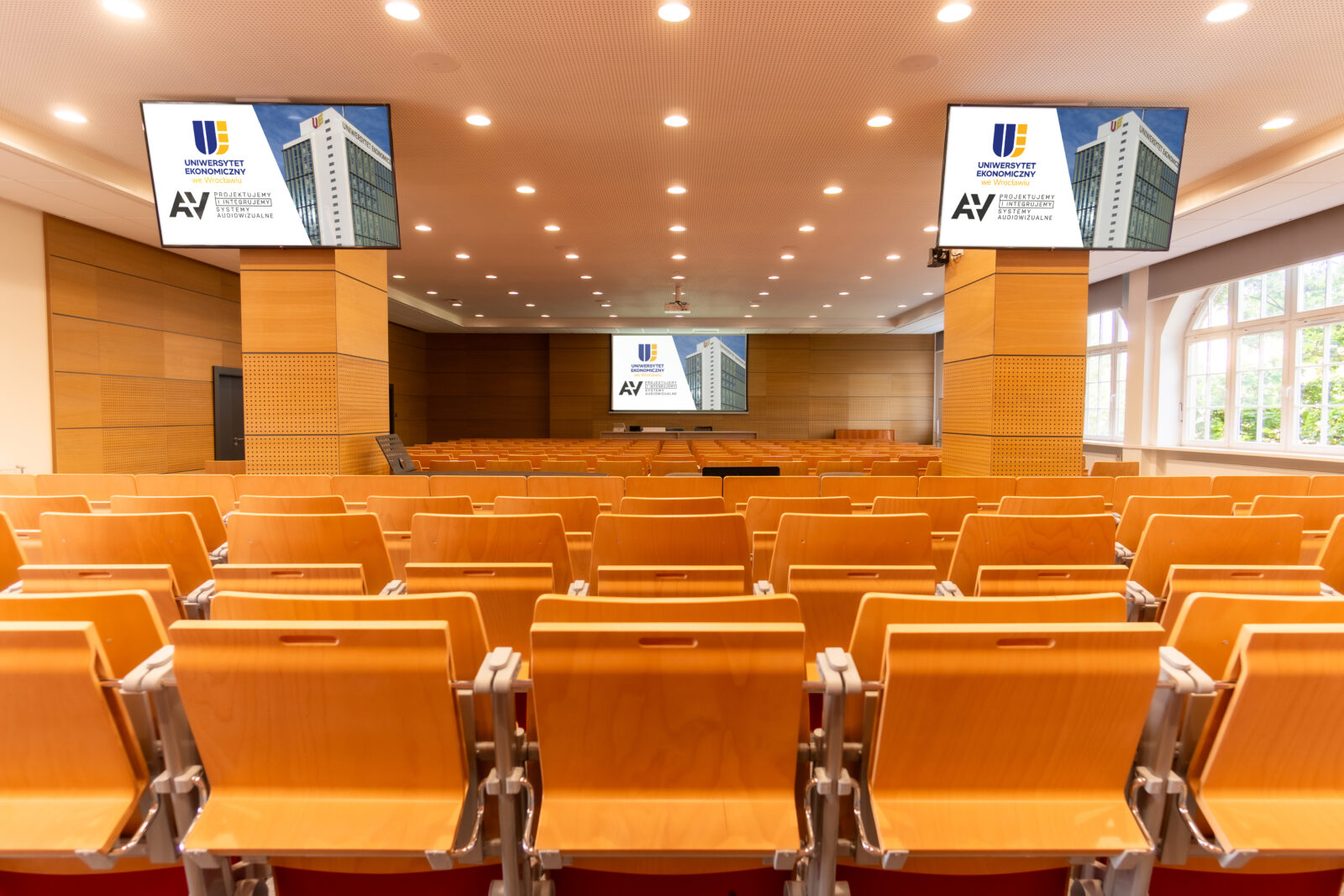
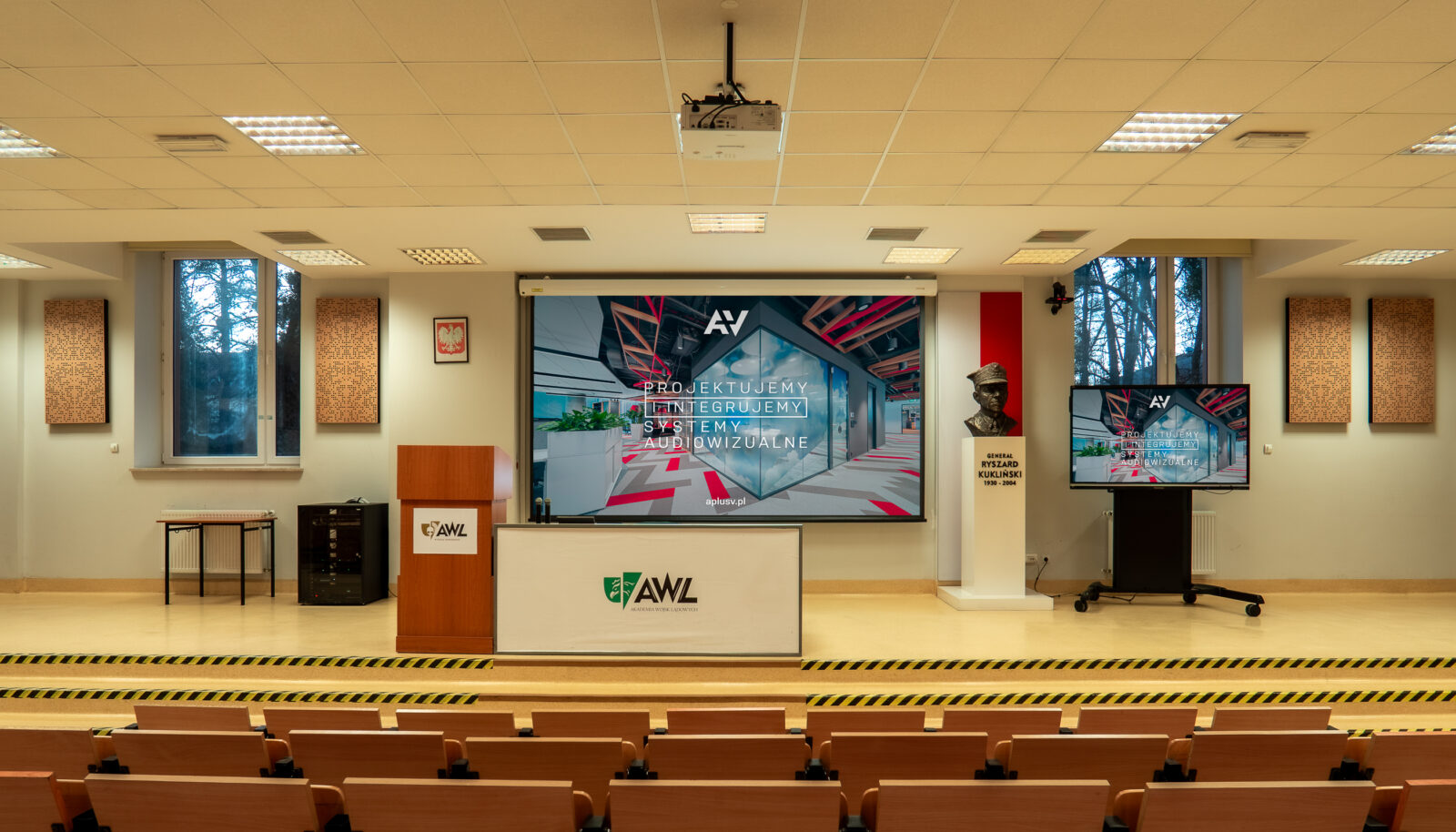
At A+V, we design and implement complete, intuitive ecosystems – modern learning environments that remove barriers and maximise educational benefits. We know what works in academic practice, and our experience is based on numerous comprehensive projects delivered for institutions including the University of Opole, Wroclaw University of Economics and Business, the Military University of Technology in Warsaw and the General Tadeusz Kościuszko Military University of Land Forces in Wrocław.
Let us look at the key features that are redefining the standard of a modern university today:
- Virtual room connection (AV-over-IP) – Several lecture halls can operate as one shared space for hundreds of participants. Audio and video are transmitted between them in real time, while each room can also operate independently when needed.
- Clear audio throughout the room – Ceiling microphones and zoned sound reinforcement ensure good speech intelligibility across the entire space.
- The lecturer can move freely around the room without having to hold a microphone.
- Clear visuals with no “dead zones” – A set of cameras captures both the lecturer and participants taking part in discussions, providing remote attendees with a natural and engaging meeting experience. An LED screen or laser projector, together with additional side displays, ensures that presented content is clearly visible from every seat in the room.
- Fast meeting start-up (MTR + BYOD) – The lecturer can start a meeting directly from the Microsoft Teams Rooms panel or connect their own laptop using a single USB-C cable. In both cases, they automatically gain access to the cameras, microphones and sound system installed in the room.
- Simple control of the entire room – Lighting, blinds, projection and audio are controlled from a single touch panel. The user simply selects the appropriate scenario, such as “Lecture”, and the system automatically prepares the room for use.
The first step towards a university’s technological transformation
Our experience has shown that one of the biggest mistakes in modernisation projects is purchasing equipment without a clear vision of how it will be used. The first step should always be to reverse the usual order of thinking: first define the educational goal you want to achieve, and leave the selection and integration of technology to specialists. It is crucial to involve an experienced AV integrator already at the initial concept stage. This is when we can work most effectively, acting as a link between the teaching needs of academic staff and the possibilities offered by acoustic and visual technology.
When planning a modernisation, it is also worth considering the implementation of a university-wide audio-video standard from the very beginning. Standardising systems across teaching spaces brings major benefits for IT departments, including easier servicing, simpler network management and lower costs of maintaining spare equipment. Above all, however, it provides invaluable convenience for academic staff. A lecturer entering any room at the university does not have to learn how to use the technology all over again. They are greeted by the same intuitive interface, allowing them to focus entirely on teaching.
We invite you to contact the A+V experts. We provide AV audits and technical consulting, advise on funding applications, share our expertise and help turn your vision into a comfortable hybrid learning environment.