Three must-haves for your office: quieter, smarter, more precise
2025 | decemberThree must-haves for your office: quieter, smarter, more precise
Whether you are planning a refresh of part of your office or a full modernisation of the entire space, one thing remains the same, today an office is a complex ecosystem. It needs to be flexible and inclusive, aligned with the way your team works, and at the same time well designed in terms of technology and acoustics.
In our everyday work as an AV integrator, we see what makes offices function properly and what leads to costly mistakes. In this article, we share three tips that will help you build a space that responds to real needs. Whatever stage your project is at, it is worth keeping them in mind.
#1 Cross-discipline coordination is the golden rule. Do not be afraid to ask questions, talk and invite specialists to the table
Modernising an office is a complex process which, just like solving a Rubik’s cube, requires not only skilled hands but also a well thought-out strategy and awareness of interdependencies. There are billions of possible configurations, but only one really works, the one that arises from understanding, experience and the coordination of many hands and minds.
Today, it is no longer enough to design the space separately, then furnish it and only at the end choose the technology. An effective office is created when decisions are made in dialogue and with the involvement of all key stakeholders: architects, technology integrators, HR, IT, administration, tenants and end users.
 From the perspective of an audiovisual systems integrator, we see how many difficulties and inefficiencies are caused by a lack of early cross-discipline coordination. Technologies that do not match the function of the space, insufficient infrastructure for AV systems, acoustic mistakes or extra costs resulting from late design changes are common effects of working in silos. Meanwhile, the goal is clear: people should want to work there, with energy, focus and a sense of purpose.
Cross-discipline coordination connects all trades within the office, from electrical and health and safety to air conditioning, into one coherent and efficient whole. Already at an early stage, it is worth creating an interdisciplinary working group or advisory board, bringing together representatives of key departments and external experts.
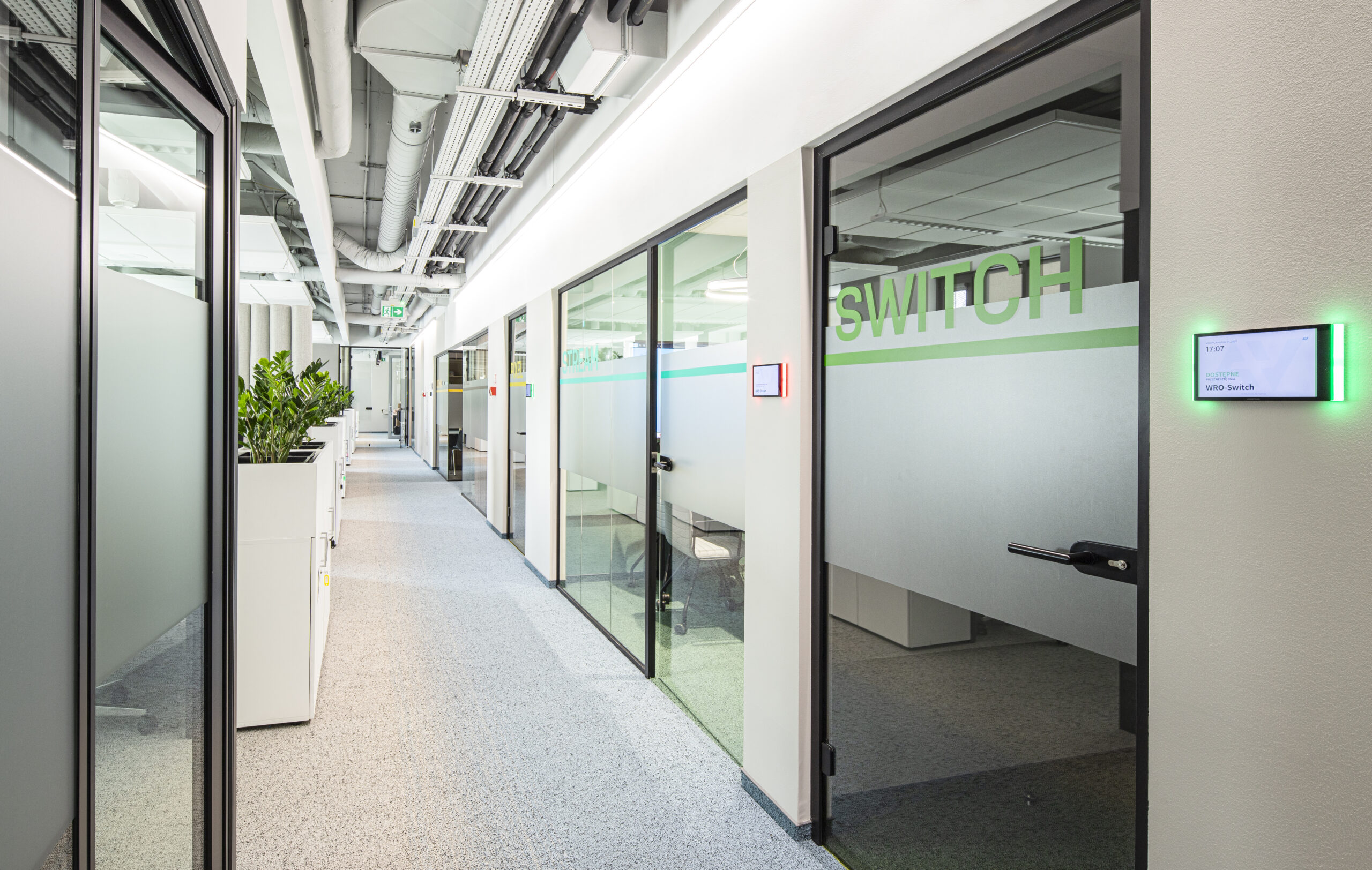
This approach not only enables faster and better decision-making, but also helps to avoid costly mistakes and turns the project into real support for business processes. Based on our recent projects, we know that well managed cross-discipline coordination is no longer a “nice to have”, but one of the key factors for success.
#2 Acoustics are a foundation, not a detail. Plan them at the start, before your office begins to “sound” bad
In recent years, offices have gone through a major transformation. From spaces for everyday work, they have become showrooms, event venues and places for meetings, collaboration and knowledge sharing. However, regardless of how their function changes, one problem remains the same – noise.
According to a report by Jabra, as many as 74% of employees point to background noise as a source of mental discomfort, and 63% say that it also affects their physical fatigue. What is more, the biggest problem is not the noise of machines, but conversations between colleagues, especially in open-plan areas. If we add poor sound quality during online meetings, which often leads to misunderstandings, tension and extended calls, we have a ready-made recipe for lost productivity and a reluctance to work in such an environment.
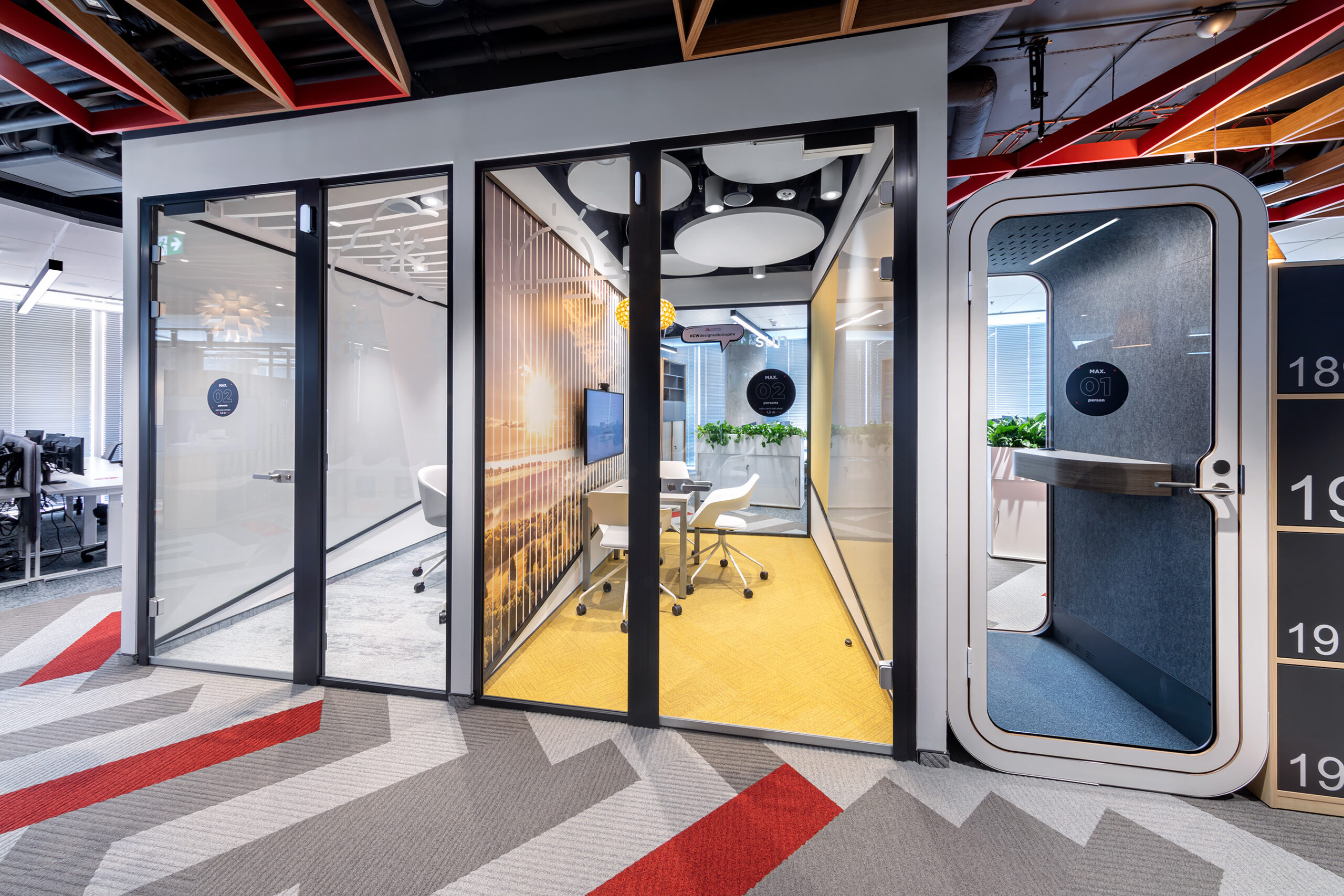
This is why acoustics cannot be treated as something that will “be fixed later”. Planning them properly already at the architectural concept stage is an investment that pays off on many levels: from employee wellbeing, through avoidance of extra costs, to the quality of collaboration and effectiveness of communication.
An office should offer different acoustic zones: from spaces for focused work, through meeting rooms, to social and integration areas. Each of these requires a different approach and different sound absorption parameters.
It is important to remember that audio technology cannot “repair” poorly designed acoustics. Echo, poor wall insulation, leaky doors or an insufficient number of sound-absorbing panels are problems that even the best microphones will not solve. That is why cooperation between the architect, AV systems integrator and acoustics specialists is so important right from the beginning.
A consciously designed acoustic environment not only improves comfort at work, but also genuinely supports concentration, reduces stress and increases engagement. All of this translates into better business results.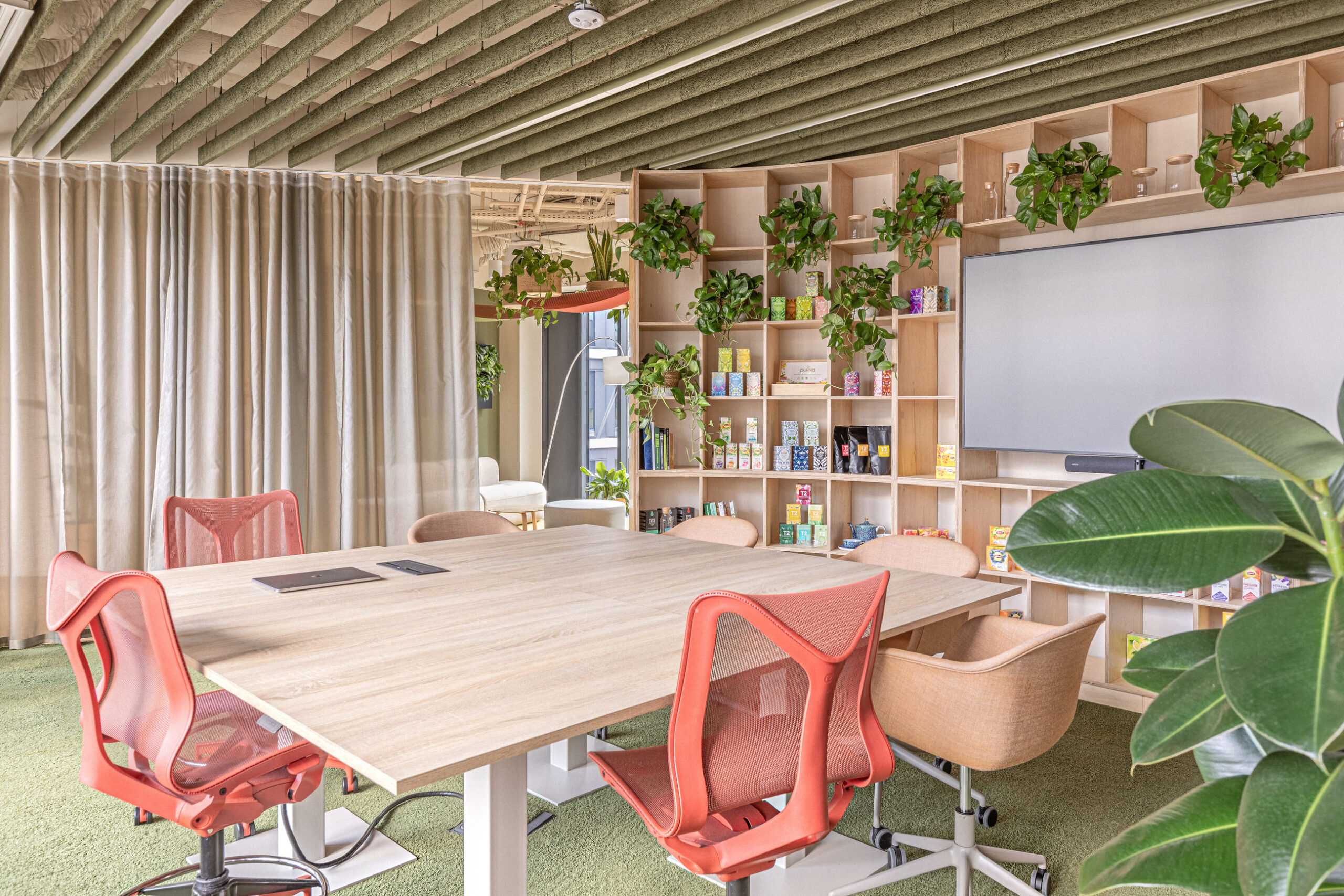
#3 The management board loves numbers. Give it a reason to listen to you – collect data on how the office is used
Measure, measure and measure again. Collect hard data for the management board. Whether the office has just been modernised or you are only planning changes, it is worth knowing how it really functions.
You can obtain data in many ways. In our opinion, the most effective method is to use audiovisual systems and the support of AI. With their help, you can monitor the use of space in real time. Instead of saying, “employees complain that there are not enough meeting rooms”, you can show concrete data:
- how the rooms are used (types of meetings),
- which rooms are the most popular (overloaded) and which are avoided by employees,
- how many meetings are held per day, week and month,
- how long the meetings last,
- how many people actually attend meetings in specific rooms (attendance, whether they are really used as intended),
- which rooms are not available because they are blocked by recurring meetings without participants (the number of “ghost meetings”),
- and additionally you can collect data on temperature, humidity, air quality and noise levels.
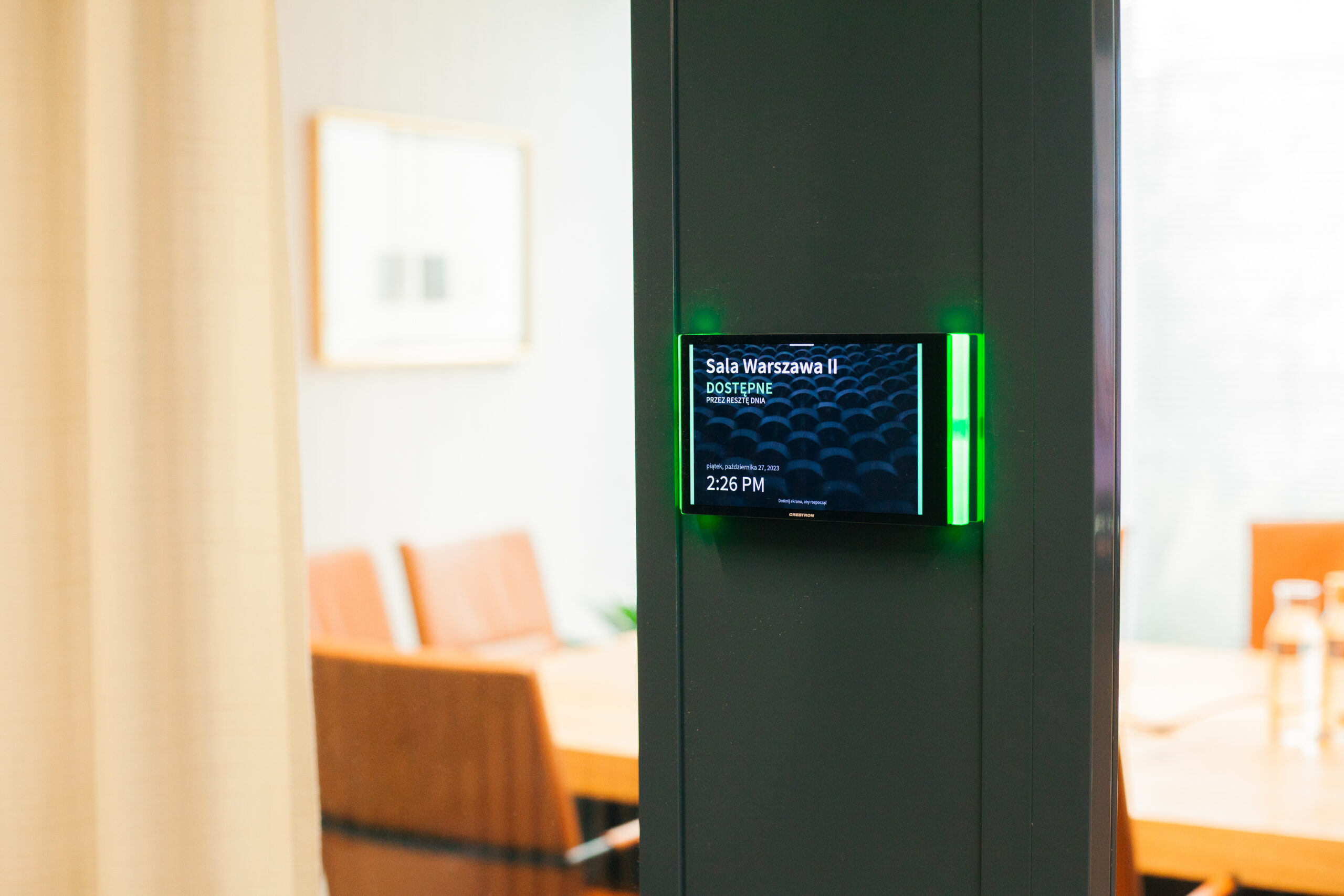
With the help of AV systems, you can check how your office really “lives”, how people move between different spaces, which days are “office days” and which days the building is almost empty. You receive all this information in an accessible form, with the option to generate various reports and charts, completely anonymously and without interfering with user privacy.
Thanks to this data, you can not only better understand the needs of users, but also build a convincing business case for the management board. Data from AV systems is information that changes the rules of the game. Instead of guessing why people do not use certain spaces, you can find out and respond: change their function, add more light, provide the right equipment, improve acoustics or make booking easier.
By measuring and analysing the real use of the office, you not only prepare for future changes, but also regain control over a space that should work for people and for the organisation.